Feeds:
Posts
Comments

This is the last of the tortoises, I promise.  I finally got round to downloading some photos off my phone today, including one of this little chap – a tiny little baby tortoise.

Wild Baby Tortoise in Turkey

I came across him (or her – it’s very difficult to tell with tortoises) during a mountain bike ride.  He’s being shy, but I promise that he had the full complement of head and legs.  I’m no expert, but he can’t be more than a year or two old.  It’s a good sign that the population of tortoises in Turkey is a healthy one.

And yes, he is in the palm of my hand.  I did pick it up.  I know this goes against my earlier advice, but I did it because the little fella was making his way across the road when I found him.  I think I was justified in moving him away from the traffic in the interests of safety.

OK.  I’m back from holiday.  It’s been a warm evening, although a little windy, so I took a quick trip up to the main badger sett in the hope of seeing more badgers and hopefully some cubs.  I arrived a little late – 8.05pm – and luckily I sneaked into the area of the sett quietly because only 5 minutes later a pair of badgers emerged at the east end of the sett.  They snuffled and foraged around the sett and slowly wandered away.

I sat and watched for another 45 minutes but no other badgers emerged.  The sett looks active, with fresh spoil visible outside at least half a dozen holes, but I still haven’t seen evidence of more than three badgers this year.

Two years ago I sat at this sett and watched groups of up to ten badgers engaging in all sorts of social behaviour.  For the last couple of years though it’s been just a few individuals and much less social interaction.  And no cubs.  I’m not sure what has happened.

I write this blog mostly as a diary of my experiences so that I can keep track and look for patterns.  In this respect, it is just as valid to record only a few badgers (or even none at all) as it is to record a big group.  It may turn out to be more interesting in the long term.  But I have to say, on a personal level  it would be good to see some more badgers.  I enjoy being outdoors in the evening, but the badgers definitely make it special.  It would be very nice to come back one of these days and say “look everyone, here’s some pictures and video of a whole bunch of badgers!”

And here’s the dilemma.  Do I persist in watching at the main sett to see if I can figure out what’s happened?  Or do I swap and spend more of my time at another sett in the hope of seeing more (and more interesting) badger behaviour?  In an ideal world I’d do both, but my time is limited at the moment.  I must confess, I’m getting tempted to move my attentions to another sett for a little while.  I think I’ll learn more that way, as well as it being more enjoyable.

Yesterday I decided to escape the hurly-burly for a little while and wander off on my own – something I do from time to time.  I like to get off the beaten track.  Yesterday was a new experience for me though, as I went out with the objective of tracking down and finding wild tortoises in the scrub on a nearby hill.

Now, since tortoises are not native to Bedfordshire (not even the 11th Duke of Bedford, who was responsible for introducing so many alien species, managed to introduce tortoises) it’s reasonable to assume that I’m not at home.  In fact, we’re on holiday in Turkey this week.
The coastline at Teos, Turkey
I’m no expert on tortoises, but I came across one a few years ago in a similar environment and at the back of my mind I’ve wanted to find another.  When we arrived at our hotel I noticed the undeveloped countryside in the vicinity and decided to have a look.  The land here in Turkey is arid and dry and the ecosystem is characterised by water saving species.  The vegetation is scrubby and thorny, designed to resist being eaten by the few animal and bird species. Tortoises fit in well here, being able to conserve water and go without drinking for long periods, getting most of the fluid they need from the plants on which they feed.

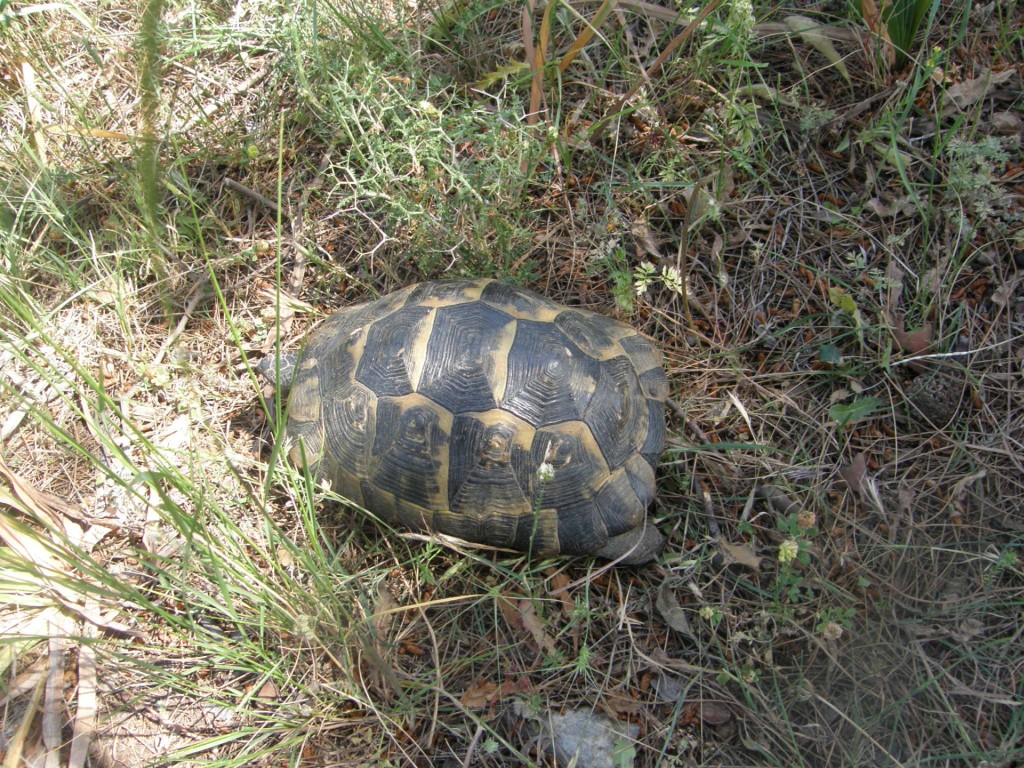
Wild tortoise in Turkey

Anyhow, I decided to take a walk and look for tortoises. I’m used to having odd ideas like this.  Most of the time they come to nothing.  Sometimes, just sometimes, they’re successful.  After a couple of hours of hopping over limestone outcrops and thrashing through thorn bushes I’d managed to find a couple of splendid tortoises.  They’re funny things to see in the wild – I think I’m used to seeing them as pets and they seem somehow out of place in the countryside.  I was jolly pleased to have found them because they’re a new species that I deliberately set out to find (based on a minimum of knowledge) and I actually managed to do so.

Wild tortoise in Turkey

The only thing I can remember about wild tortoises is that you shouldn’t pick them up.  Apparently they’re quite sensitive to stress.  One of their defensive behaviours is to urinate when attacked.  Not only does this mean you could get covered in tortoise pee, it means that the tortoise loses vital liquid that it may have difficulty replacing.  So, if you come across a tortoise in the wild please leave it where it is, unless it is in obvious danger (like in the middle of the road or something).

Wild tortoise in Turkey

This post is nothing to do with badgers, I’m afraid, but it was an interesting diversion nonetheless.  As I always say, wherever you are, there’s always wildlife to be found…

“When I was in Muckley the other day–“
“Muckley? That’s a ways”
“Two miles or more, easy”
“Gosh, I’d like to travel someday…”

Jabberwocky

New Pastures

Various work and family commitments kept me at home in the evenings this weekend but I managed to sneak out on Sunday morning for another look for badger setts.  I didn’t find what I was looking for but I did explore the far side of the woods and add a couple of new setts to my map of the area into the bargain.

I may have mentioned that the woods are on the top of a hill – not a huge hill, but big enough for this part of Bedfordshire.  Odd as it may sound, almost all of my attention to date has been on the side of the hill nearest our village, so it was time I paid a visit to the other side.

Woodland Trail

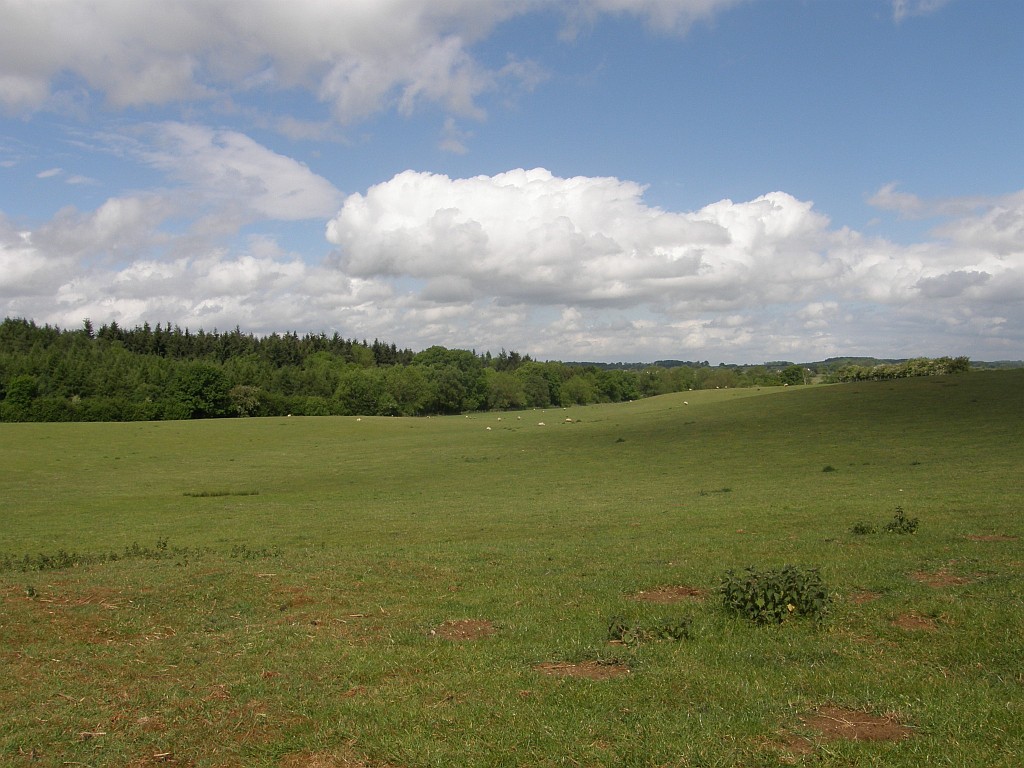
The woods are a mixture of conifers and deciduous trees, surrounded by pasture.  It’s ideal badger country.  I was looking for the sett that bordered the main sett on the east side.  I thought this was the Beech Tree sett but I’m not sure now.  It doesn’t seem to be active.  I didn’t find any sign of a sett in this area, but I find a couple of new setts further to the east.

Here’s what looked to be an old and established sett on quite a steep slope.

New Badger Sett

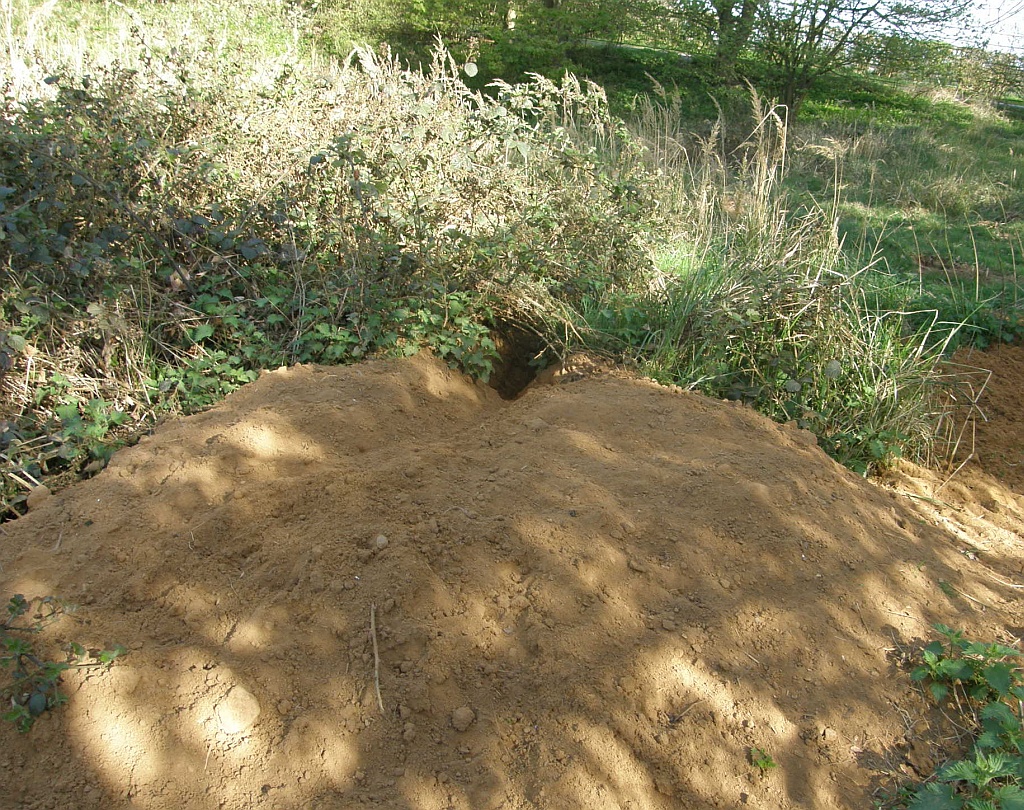
The spoil heaps in the sandy soil are huge.  The badgers must have worked for generations to alter the landscape like this.

New Badger Sett 2

It rained heavily early on Sunday morning so there were no tracks visible, but the sheer size of the excavation could only mean badgers.  There were a number of holes linked by obvious paths, so this seems to be an active sett.

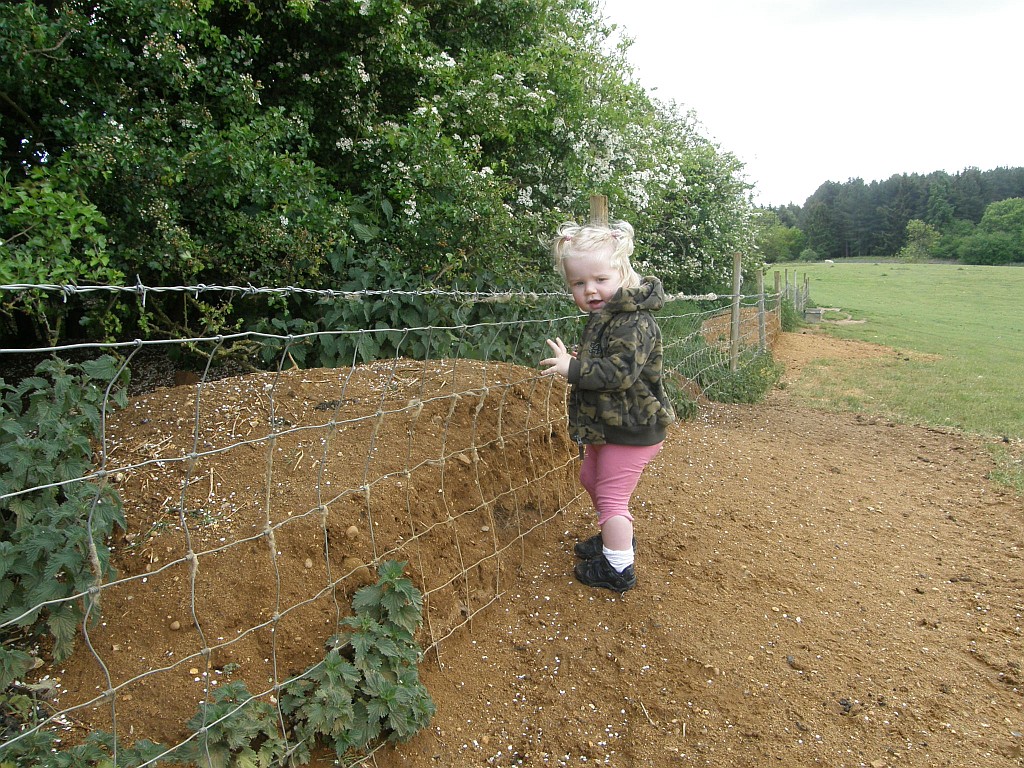
Here’s another sett.  This one was outside the wood in a hedgerow that was only one hawthorn tree wide.  I’ve seen hedgerow setts like this before.  It shows how badgers can adapt to most places.  There were two main holes, the spoil from which had spilled through the fence and been worn away by the sheep in the field.  My young assistant here shows the scale.

Spoil heaps at the badger sett in the hedgerow

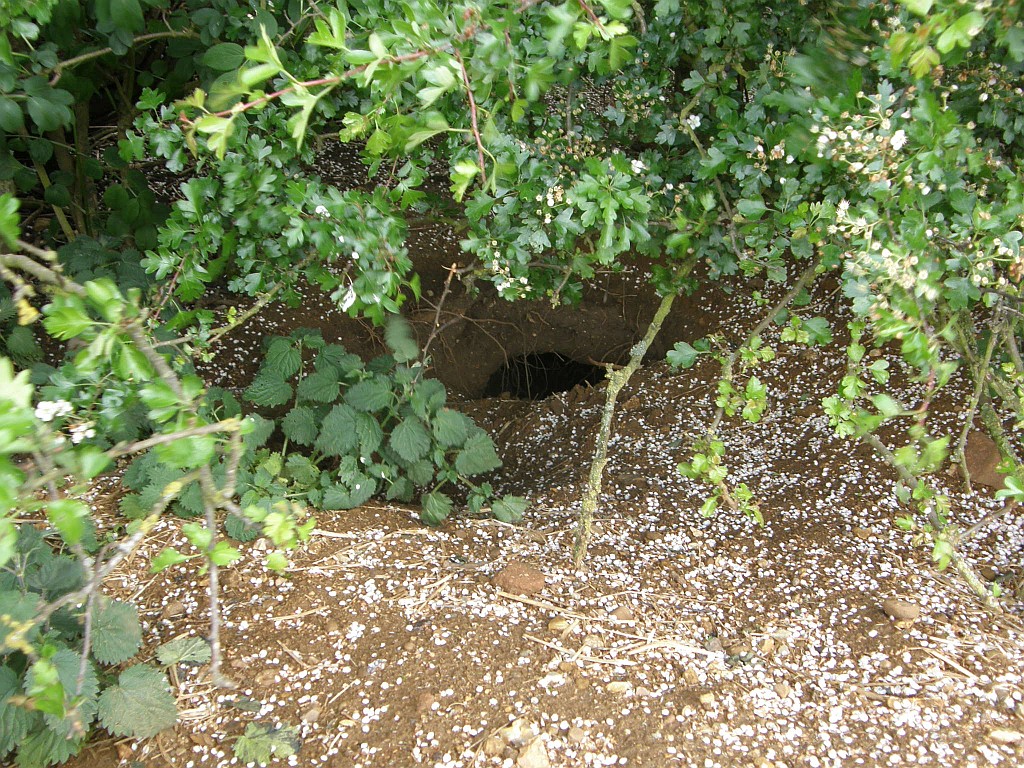
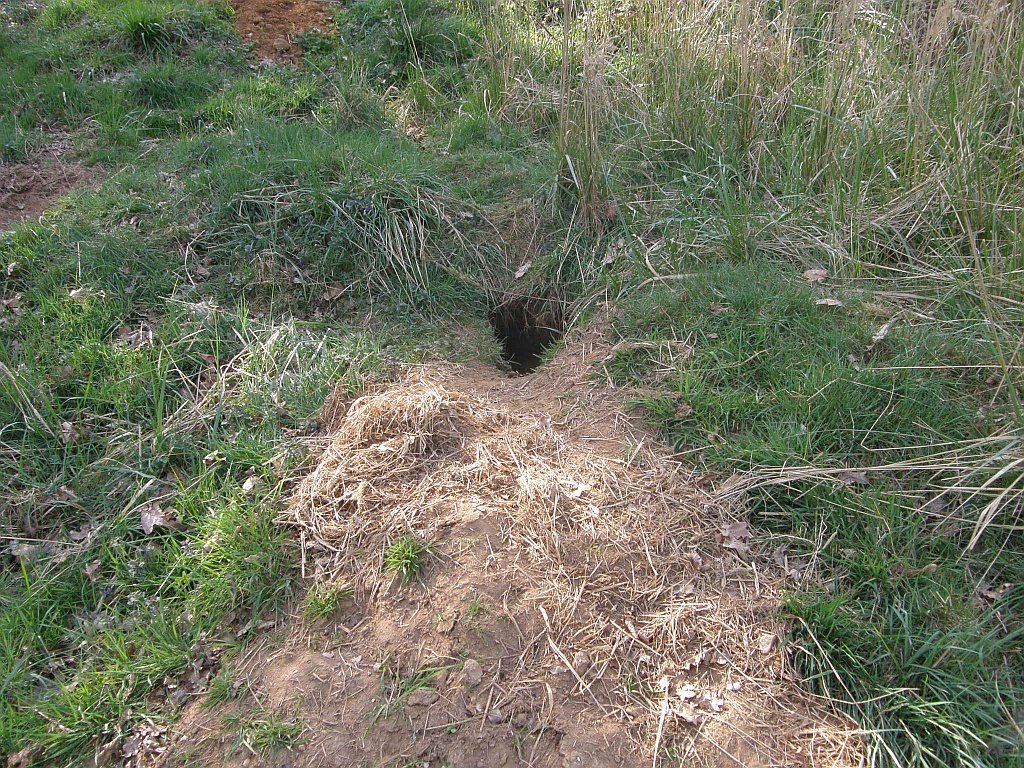
The holes were visible in the bushes.  Again, there were no tracks, but the shape of the hole, the size of the spoil heaps and the discarded bedding all point to badgers.

Hole at the Badger Sett in the hedgerow

So I’ve got a few more coloured dots on my badger map, even thought there’s still some significant blank spaces.  But all in all it was an enjoyable walk, even if it was almost into the next parish.

The fine weather is continuing and it really feels like early summer now.  Everything is lush and growing in the warmth.  Tomorrow is May Day – Beltane in the old celtic calendar – which marks the start of summer.  The celtic fire festivals neatly divide up the year.  Beltane is the beginning of summer, Samhain on November 1st is the beginning of winter. It means we’ve got six whole months of summer ahead of us after today.

Which is good, because I seem to have lost my badger mojo lately. I paid a visit to the Hawthorn sett this evening.  Last time, you’ll remember, I only managed to see half a badger here.  This time was even less impressive.  I didn’t see any parts of a badger at all.

My badger watching aims at the moment are quite simple:

  1. to get a reasonably accurate estimate of badger numbers at the main sett, the Pine Tree sett and the Hawthorn sett  so I can track this in the future,
  2. to locate the active sett in the vicinity of the Beech Tree sett and monitor that too,
  3. to see this year’s cubs at one or more setts, for no other reason than they’re cute and fun to watch.

Now, I’m not some sort of ultra-hardcore badger watcher.  The main reason I do it is to spend time outside, enjoying the countryside – listening to the owls, smelling the scents of a wood at night, that sort of thing – it’s a way to relax.  But I do like to follow some sort of plan, and right now I don’t think I’m making much progress.

Some of this is to be expected.  After all, the Hawthorn sett is new for me, so I may need some time to learn the habits of its residents.  And I don’t have as much time as I’ve had in previous years.  But I’m starting to suspect that the badgers are playing tricks on me this year…

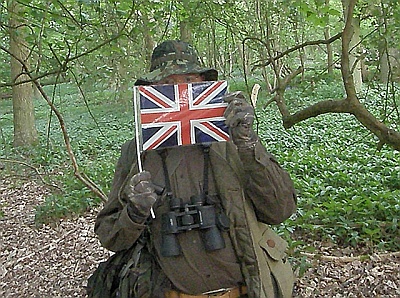
Badger Watching Man being patriotic on the day of the Royal WeddingToday is the day of the royal wedding – Prince William and Kate Middleton tied the knot.   I like Prince William.  Not only does he live on Anglesey (a place I know well) but everyone got a day off work for his wedding.  There’s been street parties and flag waving all over the country.  Bread and circuses?  Yup – that’ll do for me.  I’m happy with that.

We had a party in the village.  Everyone brought food and drink to the village hall (including some home-made cider) and the whole village had a slap-up feast followed by games on the green – five-legged races, welly-throwing, tug-of-war and so on.  It was a great day that showed just how eccentrically the British can celebrate when they want to.

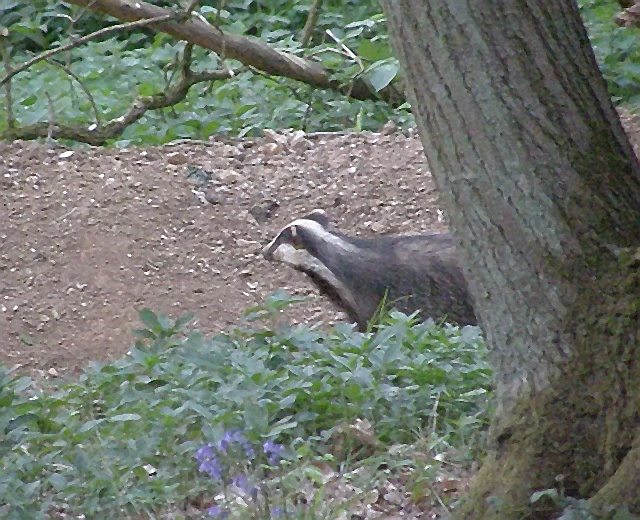
In the evening I took advantage of the day off work and the fine weather and walked up to the wood.  I want to get an ideaFirst Badger of 2011 of the number of badgers at the sett.  Hopefully there’ll be cubs soon too.  As it happened, I only saw one badger so I’m no wiser about the total number.  This badger emerged at 8.15 and snuffled around the leaf litter contentedly for the next 20 minutes or so before wandering off deeper into the wood.  There was just enough light for a photo (only just).  It was a normal, healthy badger foraging for food, but it was on its own.

I’ll keep watching.  Sooner or later the badgers will reveal their secrets…

Scarlett in BluebellsThe bluebells are out early this year.  We went for a walk as a family this weekend to go and see them.  They’re not fully out in the wood yet, but they’re definitely there.  The picture of the bluebells at the top of this page was taken a few years ago in mid-May, which means this year is very early.  I read somewhere that this is due to the warm weather we’ve had lately, but I always thought flowering was controlled by the duration of daylight (or more properly, the decreased duration of darkness).  Perhaps the days have been lighter as well as warmer?

Anyhow, this post isn’t really about bluebells, pretty though they are.  It’s to record my first badger watching visit to the Hawthorn sett.  I’d love to say that it went like a dream and I spent a lovely evening in the company of badgers as they cavorted and frolicked in front of me, but that would be too easy.

In fact, these badgers proved to be just as awkward as any others I’ve watched.  They didn’t seem interested in a grand debut performance.  I settled in to watch at about 7.40pm.  Nothing happened.  This wasn’t a problem – I can’t expect the badgers to come out at the same time as the others.

At 8.26 I heard the sound of scratching from behind a bramble patch.  Definitely a badger, but one that had come out from one of the few holes not visible from my spot.  At 8.30 I caught my first glimpse of a badger at this new sett – just its head peeping out over the undergrowth.  And that was all, until the light faded.  A single badger scratching contentedly.

The sett is big and active, so there must be more badgers in residence.  Hopefully next time I’ll be able to make a better count.

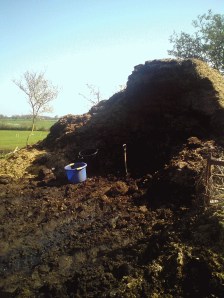
The dunghill or manure heap

The dunghill at the local stables

What a beautiful weekend.  Never mind spring, we’ve had a couple of days that wouldn’t have been out of place in summer.  Lovely warm sun, the birds singing and the countryside coming alive.

And how did I spend this gorgeous weekend?  I’ve been digging manure from a dung heap at the local stables that resembled the Matterhorn in size and shape and transporting it to the vegetable garden again.  My rural lifestyle seems to involve an awful lot of dung, in one way or another.  If I’m not clearing it out from the chickens I’m going out and getting more for the veg.

Mrs BWM was working the late shift this weekend, so the evenings have been babysitting rather than badger watching for me.  But the weather was so nice I couldn’t resist taking Scarlett out for a walk.  Another sett survey was in order, before the vegetation gets too high.

The reason for this flurry of looking for new setts is that I want to build a better understanding of the badgers at the main sett, and this means – paradoxically – understanding the badgers at the neighbouring setts.  By getting familiar with other nearby setts I’ll be better placed to understand any changes at the main one, and also to judge the general well-being of badgers in the local area.

I’ve focused on the the east of the main sett so far, where the Beech Tree sett is.  I’ve started to doubt that the Beech Tree sett is active, but the signs all point to badgers in the area so there must be another sett nearby.  To the west of the main sett, the next one is the Pine Tree sett, which seemed to have only one badger in residence for the last year or two.  Today, I decided to go further south-west to the next sett along.  It needs a name, so let’s follow tradition and name it after a tree.  Let’s call it the Hawthorn sett.

The Hawthorn sett is 500m south of the Pine Tree sett and 900m south-west of the main sett, as the badger walks.  It is another sett that I’ve been aware of for a while but never examined closely.  I might have been missing out, because it seems very active at the moment.  I counted six active holes in a small area, plus well-used paths and latrines.  The soil is very sandy and the badgers have been digging lately, leading to some impressive spoil heaps.
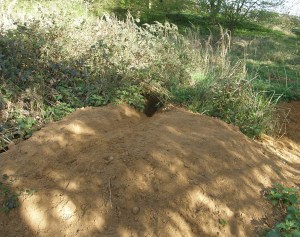
Spoil heap outside badger sett

Here’s another classic sign of an active badger sett in the picture below – old bedding that has been dug out and discarded with the spoil.  The use of bedding is a distinctive badger behaviour that you can use to tell a badger sett from a hole used by rabbits or foxes.
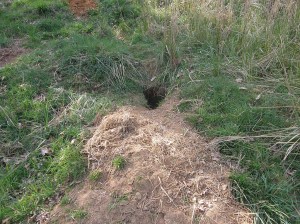
Badger sett with discarded bedding

If there was any doubt that badgers are in residence, here’s another good sign.  See the claw mark in the centre of the picture below, made by the badger as it dug out the hole?  This can only have been done in the last day or two – these marks wouldn’t last long in such soft, sandy soil so they must be recent.

Badger sett with claw marks

It was only a quick visit to the sett but there was enough time to see that it is home to a decent-sized group of badgers.  The next step is to pay a visit one evening and see if I can count the numbers.  It’ll take time to build up a full picture of these neighbouring setts but it’ll hopefully give me another piece of the puzzle.

I’ve spent the day shifting manure for the vegetable patch and buying hedging plants, so it’s been a real outdoors day.  But even better than that, I’ve been out on my first proper badger watching trip of the year.  The evenings are now light enough to get a chance of seeing badgers before it gets too dark.

By 7.50pm the sun had set and I was sitting in my favourite tree.  To be honest, I’m a little rusty.  I haven’t done this for a while.  I moved to quickly in the wood.  I was clumsy and noisy.  I put up a small herd of fallow deer and a couple of muntjac on my way in.  But hey, this is all part of the experience.  It always takes a little while to get back into practice, to really tune in and learn to move at the slow pace of the wood, not the frantic city pace that I’ve grown accustomed to.

At 8.10 I could hear the unmistakable sound of a badger gathering bedding on the other side of the sett.  A few minutes later a badger trotted into view.  You know, this will be the fifth year that I’ve been watching badgers, and I still get a thrill when I see a stripey face in the twilight.  The badger snuffled this way and that as it foraged in the dried leaves.

It was now too dark to see with the naked eye, but the badger was visible through binoculars.  Binoculars are the poor man’s night vision.  A good set of binoculars with a large objective lens will act as funnel, collecting and concentrating the available light.

Another few minutes later, a pair of badgers emerged from a hole in the middle of the sett and sat for a while grooming contentedly.  As the light faded completely a pair of muntjacs began barking incessantly and it was time for me to go.

So far, so good.  There are at least three badgers in the sett and they seem healthy and happy.  I was a bit worried last year when they didn’t seem to be thriving, but there are plenty of signs of activity at the moment.  Let’s hope they have a better year this year.

Well, I got out of work on time, and the dead polecat was still there, so I stopped the car on my way home and had a look.  The genteel folks of Bedfordshire were probably surprised to see a smartly-dressed chap in a pinstripe suit and trilby hat walking down the verge, gingerly carrying a manky dead polecat by its back leg.  Well, that was me.

Unfortunately, it had suffered under the wheels of cars.  The head area – which is key to identifying polecats – was pretty messed up.  However, there was enough to show the dark fur around the eyes and the pale fur around the muzzle – both polecat features.

On this basis I’m calling it a polecat rather than a ferret.  And why not?  My last dead polecat, only a mile away, was positively identified by the County Mammal Recorder.  There’s no reason why this shouldn’t be one too.  It looks like polecats have re-colonised this part of Bedfordshire.