Feeds:
Posts
Comments

I was driving to work early this morning, and there, at the side of the road, was what looked very much like a dead polecat.  It is true that most people don’t get excited by dead polecats, but I’m not like most people and this one was just a few hundred yards from my home.  It was on the main road, just across from the field behind my house where I go for my little tracking walks and where I’ve seen possible polecat signs over the last year.

I get excited because polecats have gone from being extinct east of the Welsh Marches to re-colonising large parts of England.  They still aren’t common though, so to have one (admittedly dead) on my doorstep is good news.  The only good thing about roadkill animals is that where there is one, there’ll be other live ones nearby (with the possible exception of the dead wallaby a friend of mine came across in Buckinghamshire once – they’re probably quite rare).

There has to be a question mark over this polecat because although the size, shape and colour looked right, I didn’t actually get out of the car and examine it.  I was on my way to work.  I had a train to catch and I was in my best suit.  I was booked in to carry out psychological assessments on senior executives from two well-known companies today, and it would not have been good to have turned up at the day job with a lingering aroma of dead polecat about me.

If it’s still there when I get home from work tomorrow I’ll go and have a proper look.

Hurry up daddy!

Hurry up daddy!

There is a weekend in our village that marks the proper start of spring.  It doesn’t have a formal date and it isn’t written on any calendar or in any diary.  It’s the weekend when all the inhabitants start to emerge and life begins again.  During the winter it’s dark and it’s cold.  If you meet people it’s usually only fleeting as you hurry by.  But this weekend we’ve all been out – mowing lawns, digging gardens, walking to the park or just chatting over the fence.  The daffodils are out, the primroses are in flower and the blossom is thick on the blackthorn, but this awakening in the village means that spring is truly here.

I’ve been looking after Scarlett today so there was no badger watching, but the beautiful weather (and the longer evening now the clocks have gone forward) was too good to waste.  It was out with the backpack baby carrier and off to the woods.

I did have a proper aim for this.  I’m still trying to locate the badger setts that neighbour the main one I watch.  But it wasn’t all serious.  It’s the first day for months that was warm enough to spend some time outside, so I packed a picnic for Scarlett’s tea so that we could have a little adventure without having to dash back home.

And an adventure is what we had.  I walked almost to the next village and back, up hills and down dales, and let me tell you – well-designed though the backpack carrier is – it gets a bit heavy after a few miles.

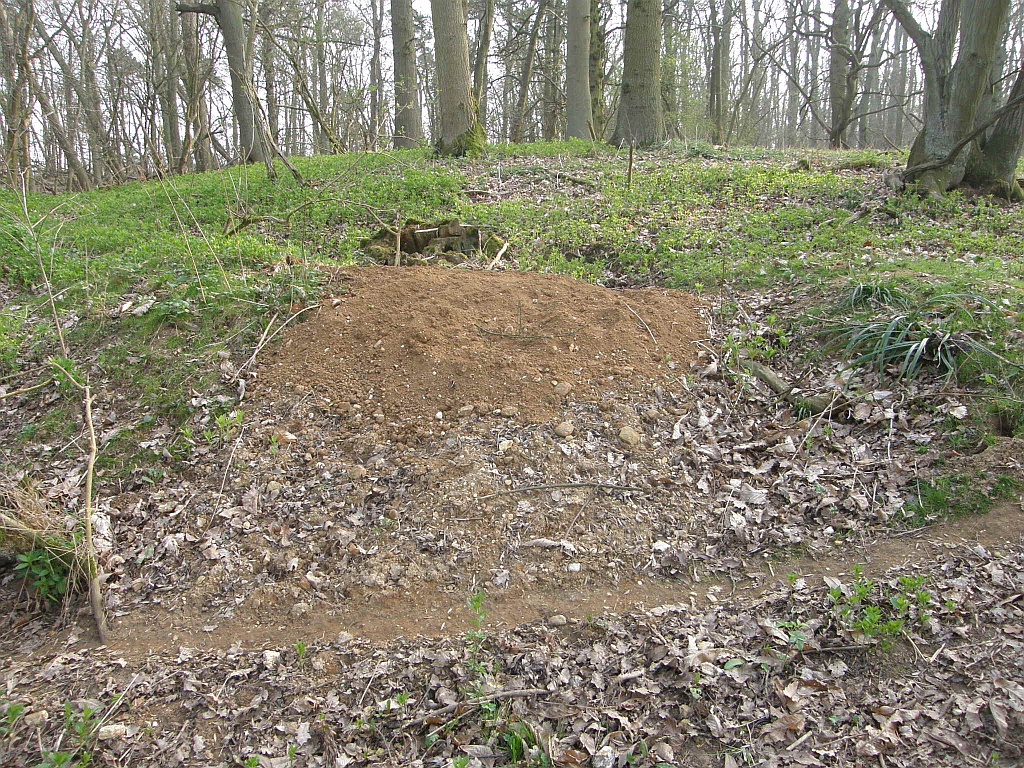
Spoil heap and path - classic signs of an active badger sett

Spoil heap and path - classic signs of an active badger sett

Did I find any badgers?  Yes and no.  The badgers at the main sett seem to be doing well, with more holes active than the last time I checked.  The spoil heaps outside the holes told their own stories.  Some were fresh soil, meaning that they were new excavations.  Some were soil mixed with the remains of leaves and grass.  This showed that the badgers were clearing out old holes, complete with the remnants of bedding.  Let’s hope there are cubs this year.

As to other setts, I didn’t find any.  I found loads of badger sign – dung pits, hundreds of tracks and even paths, but I couldn’t seem to find their focus.  I’ll need to sit and look at the map for a while and plot everything.  It’s good to know there are plenty of badgers out there, but slightly frustrating that I couldn’t locate the sett.

Only slightly frustrating.  I had a great walk.  Scarlett loved to see the lambs playing in the fields, and we had a jolly nice picnic sitting in the woods.  You know, I think it was a perfect way to spend the afternoon.

Newt I.D.

Not being a newt expert, the identity of the little chap in the last post has got me consulting the reference books.  It seems that newts are complicated.  Males and females can look quite different, and they change colouring for the breeding season.  Our three species of native newts can therefore have twelve different appearances!  But by some detective work I think I can identify this one.

I can rule out the Great Crested Newt, which is bigger with knobbly skin, and the male has a distinct jagged crest at this time of year.  Plus they’re quite rare.  That leaves the Smooth Newt and Palmate Newts.  The males of both of these develop spots in the breeding season, so it could be either of them.  The Smooth Newt has spots on its underside, whilst the Palmate Newt does not, but unfortunately I didn’t pick this one up and have a look.  The Palmate Newt has a tail filament (a short thread on the end of the tail) while the Smooth Newt doesn’t, but again, I didn’t know about this feature or look for it.

There is one clinching feature though.  Apparently the male Palmate Newt has webbed rear feet in the breeding season.  My newt did not.  This means it isn’t a Palmate and must be a Smooth Newt.  It makes sense, they are our most common newt and known for living in small ponds.

So there you have it – a Smooth Newt. and a new species for me here in Bedfordshire.  I told you that newts were complicated…

Beautiful warm night tonight, which is fitting for the spring equinox, I suppose.  I happened to take a visit to the vegetable garden tonight (I’ve been hard at work there lately, digging and planting) when I heard a commotion from the pond in our neighbour’s garden.  Shining the torch, I could see that there were dozens of toads sitting on the damp grass and splashing in the water.

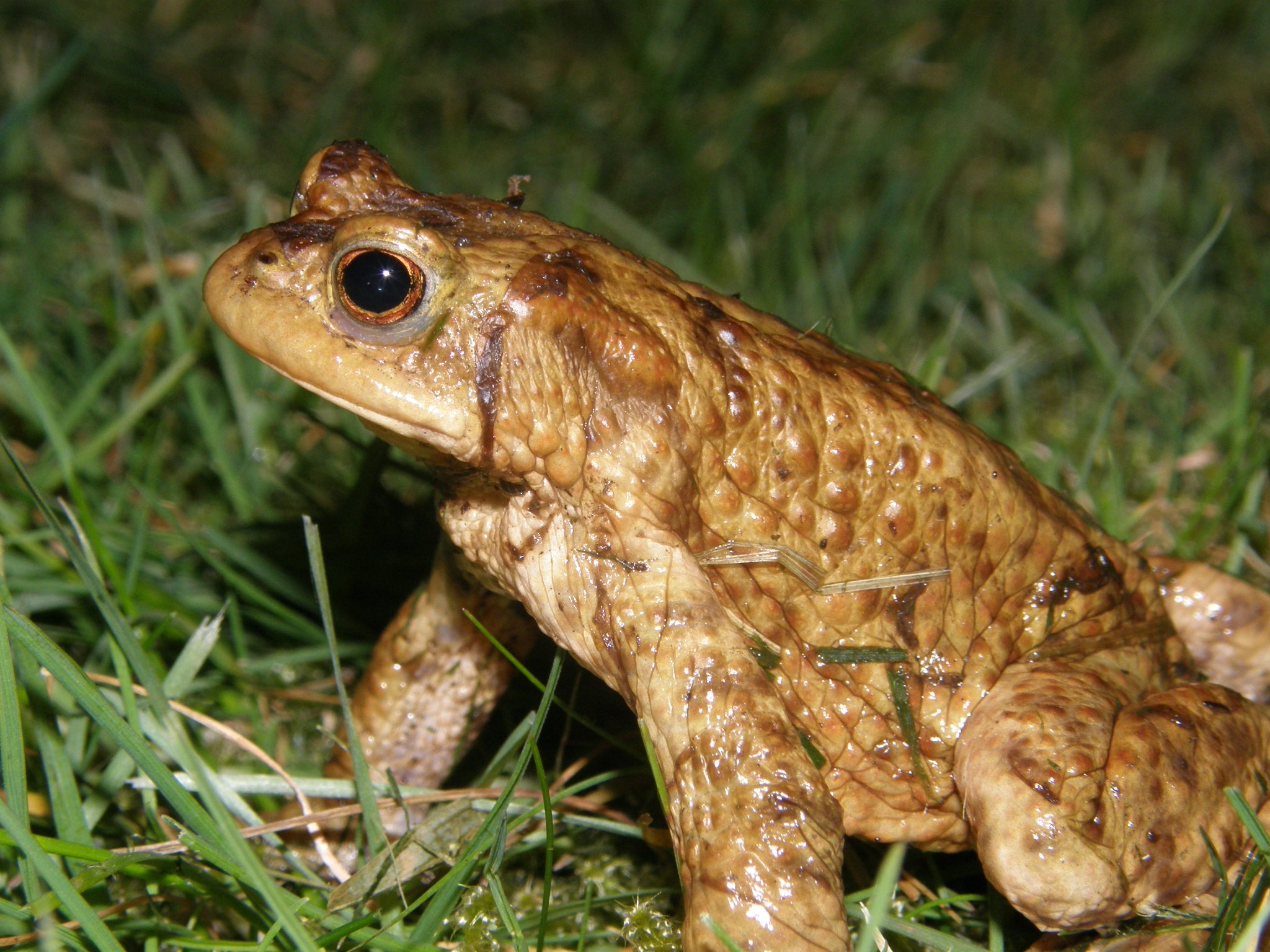
Common toad - Bufo bufo

It is obviously toad mating time again – there was no doubt what some of the toads were doing.

The fascinating thing was the noise they were making.  I’ve never heard toads sing like this before, but they really did make quite a noise.  Here is a recording I made (turn your volume up) that captures the sound:

I’ve seen toads mating here in previous years, but the sheer number this year made it quite a spectacle.  For a species in decline it was good to see them obviously thriving here.  Hats off to my neighbour for having such a good wildlife pond in his garden.

Mrs BWM made the find of the evening when she came across a small newt on the edge of the pond.  I’m not a newt expert by any means, so I’m not sure what species it is.  I’ll look it up in the guidebooks when I get a chance.

NewtI remember reading somewhere that newts will eat frog- and toad-spawn, so perhaps it wasn’t as innocent as it looked.

It’s been a quiet weekend because the whole family has been poorly with another cold.  I haven’t ventured far out at all, despite the nice weather, opting instead to sit inside under a blanket and feel sorry for myself.   We used to be so fit and healthy, but as soon as young Scarlett started going to nursery we’ve succumbed to every single bug and virus that’s gone around.  ‘Scarlett fever’ – ha ha!

As a result of my moping, the only little snippet I can add to the body of naturalist knowledge this week is a picture of the droppings of a Chinese Water Deer from the garden.  It isn’t much, but they’re not a common deer species so it’s useful to have a record.

Chinese Water Deer Droppings

Chinese Water Deer Droppings - scale in cm

The Handbook says this of the scat of Chinese Water Deer: ‘Usually1.0-1.5cm long x 0.5-1.0cm wide; not normally aggregated, black or dark brown, cylindrical, pointed at one end, rounded at other.

So now you know, should you ever come across any…

A pool in Folly Wood

A pool in Folly Wood on Flitwick Moor

Despite persistent rain yesterday, this morning was bright and clear.  There was definitely a more spring-ish feel to the day.  I still want to continue my surveys of the local badger setts but today I decided to venture a little further afield for a change.

Flitwick Moor has been called Bedfordshire’s most important wetland site.  I’ve never actually visited it, which is inexcusable since it isn’t very far away.  It’s a Site of Special Scientific Interest and a nature reserve, comprising woodlands, peat bog and grassland, with the little River Flit adding an extra element.  A peculiarity of the site are the springs of iron-rich water – iron oxide gives the streams and pools a vivid orange colour.  The water was believed to have health-giving properties and there was once a small but flourishing industry bottling it for sale.
Stream in Folly Wood

A stream in Folly Wood - note the orange iron oxide

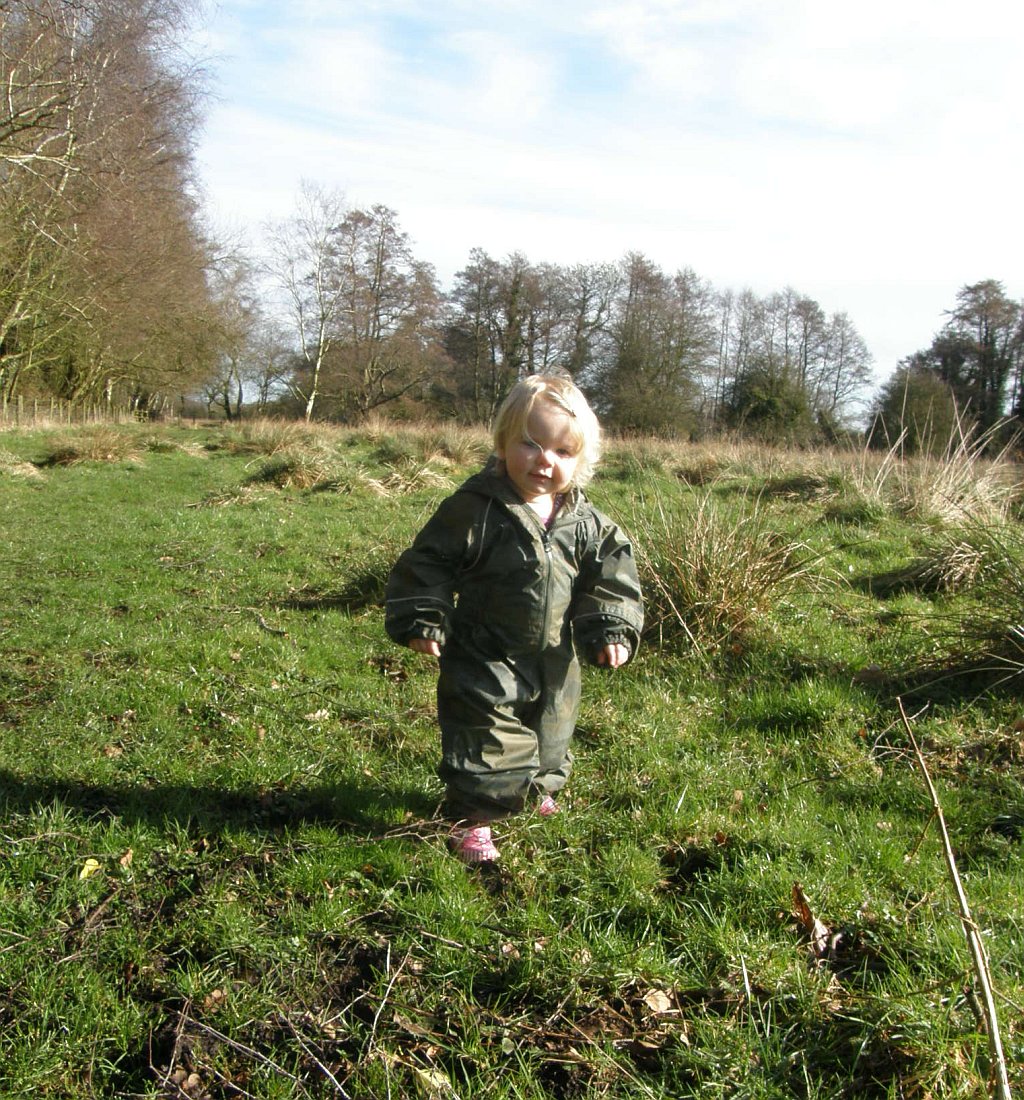
I took Scarlett for a walk.  An actual walk, not just in the baby carrier (not all the time, anyway).  She’s got the hang of the whole bipedalism thing now and she wants to practice as often as she can.  The latest piece of outdoor gear that I bought was a one-piece waterproof suit for her (in green camouflage, no less) so I can now let her roam happily and not worry about her getting muddy when she falls over.

Walking on Flitwick Moor

Walking on Flitwick Moor

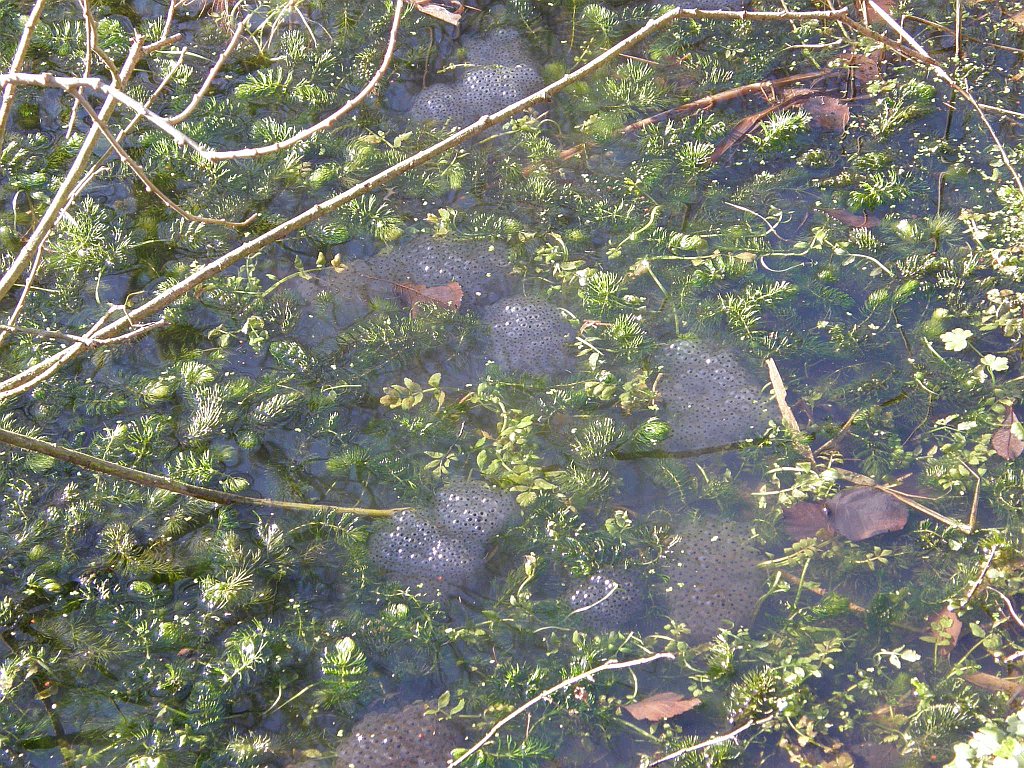
And it was a grand morning to be out for a walk.  For once the sun was shining and signs of spring were all around.  I heard my first Great Spotted Woodpecker of the year drumming, while a Green Woodpecker yaffled somewhere deep in the woods. Great Tits and Chaffinches chattered among the trees.  In a pond by the path were dozens of frogs, with clumps of frogspawn showing what they were doing.

Frogspawn

Frogspawn

But I must confess that there is another species that I really wanted to find signs of.  The moor is home to otters – only a very small population, I believe, but otters nonetheless.  Otters are high on my still-not-written-yet list of wildlife ambitions for the year.  I’ve seen signs of otters in Wales but I never thought the day would come when I’d have a realistic chance of coming across them in Mid-Bedfordshire.  It’s an indication of how far the species has recovered, although they’re not common yet.

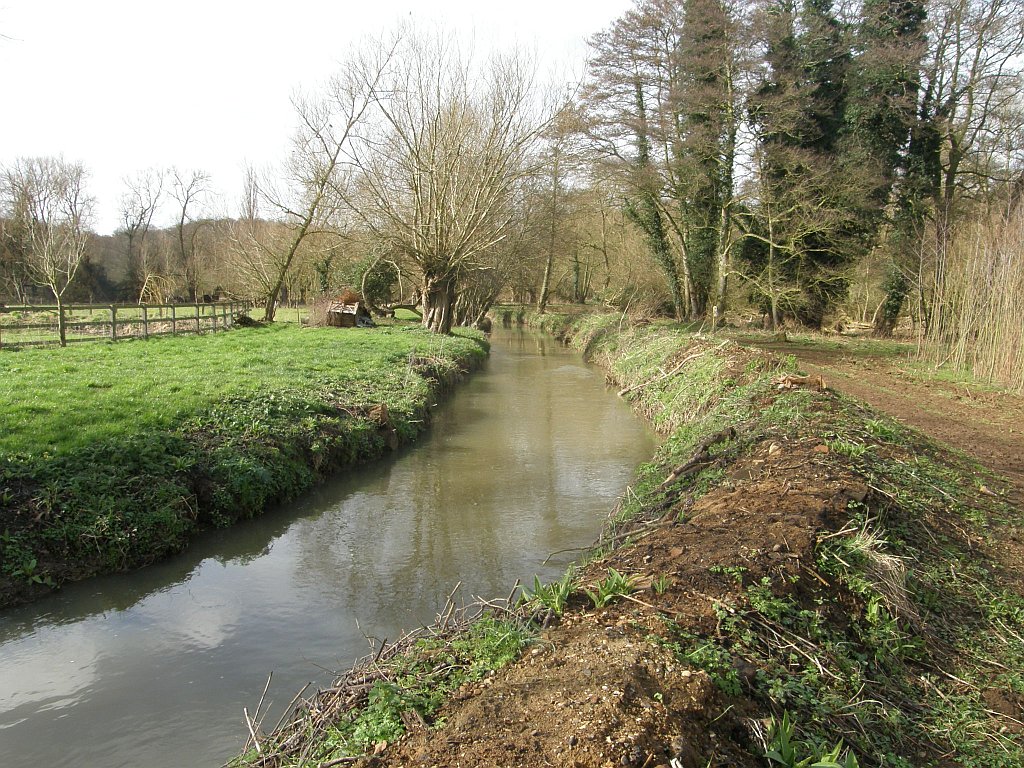
The River Flit

The River Flit

I didn’t think I’d see an otter but I kept my eyes open for tracks.  The muddy ground along the river was perfect for tracks, but it’s also a popular walking route and was covered in thousands of dog tracks, including a lot from otter-sized terriers, so picking out individual prints was difficult.  I can’t claim to have seen any prints or scat that looked ottery, but I had fun looking.  I did follow the trail of a badger for a hundred yards or so along the river.  This was odd – I wouldn’t have expected to find badgers in such a low-lying and boggy place.

So, no otters but an enjoyable walk in an interesting place.  And after all, this was only my first visit.  I’ll be back here again, I’m sure.
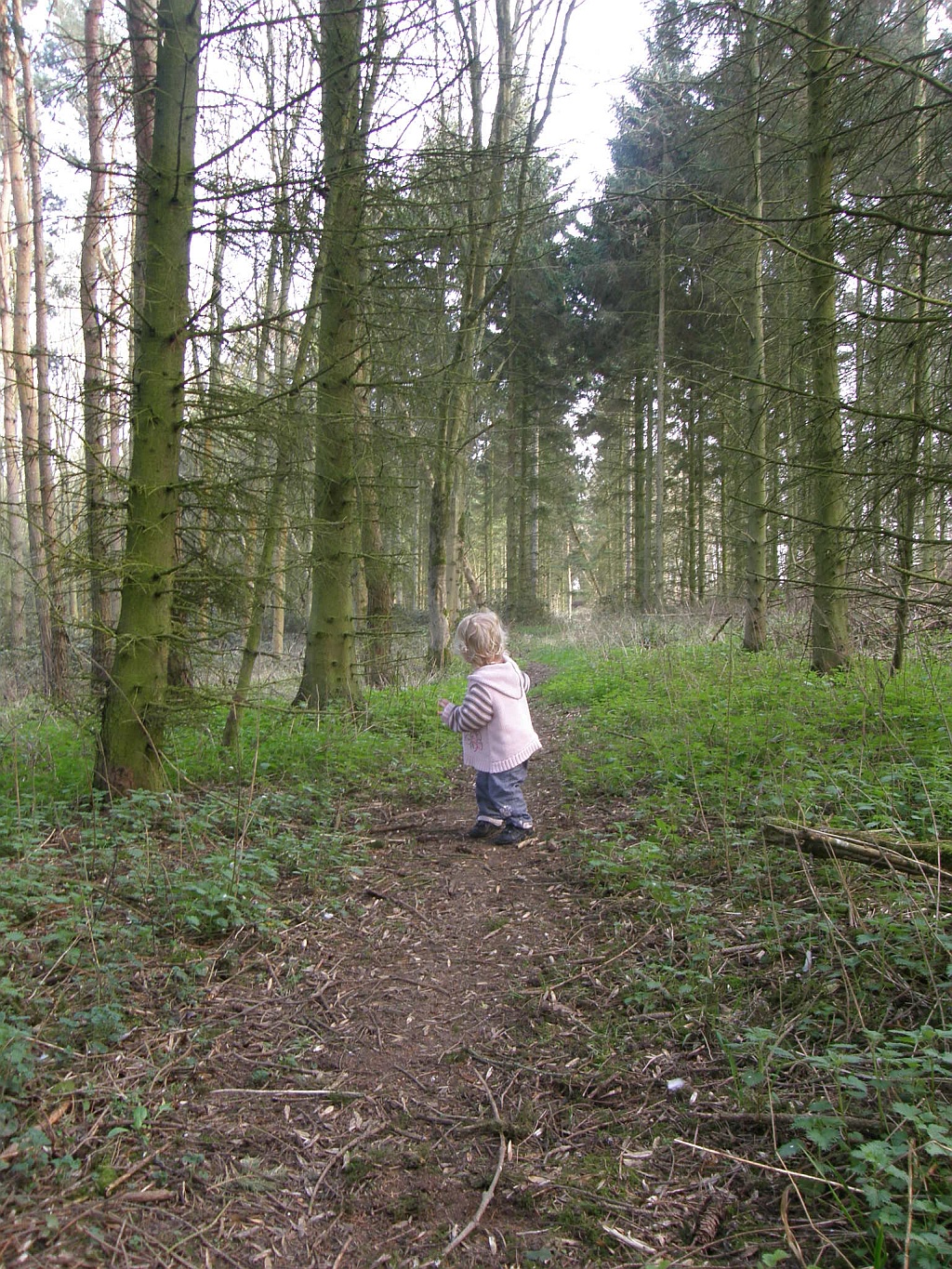
Off the beaten track

Like father, like daughter - wandering off the beaten track
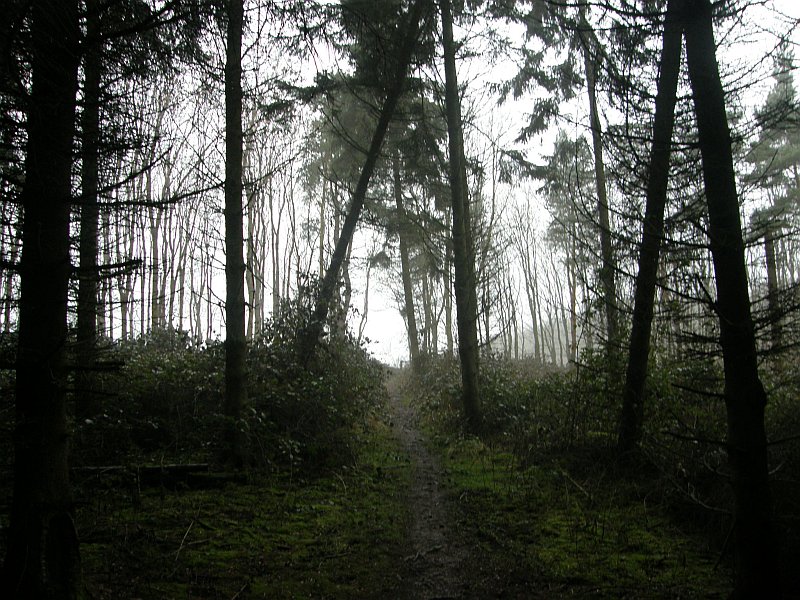
Gloomy woodsOn the one hand, there are signs that spring is peeping through.  The snowdrops have been up for a couple of weeks and the daffodils are starting to show.  The woods are thick with the first bluebell shoots and the catkins are out on the hazels.  On the other hand, the weather is still distinctly wintry.  Saturday’s heavy rain gave way to a fine misty drizzle today.  It’s been a dark, cold and gloomy day.

I spent some time this morning starting to tidy up the vegetable garden, beginning the transformation from soggy, chicken-ravaged wilderness to productive veg patch.  Speaking of chickens, I clipped their wings today to try to put an end to a recent spate of escapes (the ungrateful little minxes have everything they want – loads of space, a whole vegetable garden to scratch in and a lovely coop, and they still persist in escaping) and – avert your eyes, gentle reader – I set traps for the rats.  Where there are chickens, there are rats.  They live in my compost bins and flourish and grow fat on the leftover chicken feed.  Despite my recent chivalry towards the rat that the cat brought in, I need to control their numbers.  Let’s not be squeamish about it.

In the afternoon I was on parenting duty, so it was on with the backpack baby carrier and off to the wood.  I thought I’d follow my own advice about this being a good time of year for sett surveys and see what else was happening.  We walked to the far end of the wood, through the dark, mist-dripping trees, to the Beech Tree sett.  This was much easier to see without the summer bracken, but to my disappointment there were no signs of recent use.  There were no signs of disturbance (i.e. it had not been dug out or blocked), but it did not look at all badgery.  The footpaths in the wood showed clear badger tracks, the badger paths looked well-used (although they are also used by deer, so this isn’t a definite sign) and I was even able to track a badger through the muddy pasture on the far side of the wood and up a farm track.  But the Beech Tree sett itself was apparently unused.

I’m beginning to doubt myself now.  I’ve only ever watched this sett a couple of times, and I’ve never actually seen a badger come out.  Perhaps it isn’t a badger sett at all?  Perhaps it’s been unused for a while?  If it isn’t an active sett then there must be one close by that is.  There’s far too much evidence of badger activity for there not to be, and the location is right for my territory map.

As ever, the badgers have got me confused.  I think I need to take a few more walks up to the wood before the summer to see if I can either see some activity at the Beech Tree or track down another sett.

The backpack baby carrier

The backpack baby carrier

It’s been a while since I last had a look at the main badger sett in the wood so it was overdue a visit.  I like to go to the sett at this time of year – the lack of undergrowth makes it easy to see the layout of the site (not easy in summer when there’s waist-high nettles), and the number of active holes gives you an idea of the prosperity of the clan.  The badgers should be giving birth to cubs now; extra active holes is a sign that the females have set up separate ‘maternity’ holes safely away from the rest of the group.

The badgers seem to have declined sharply in numbers at this sett, from 12 or so a couple of years ago down to maybe just  four last year.  I was keen to check that they were OK.  There was no chance of seeing badgers in the middle of the day, but hopefully the activity at the sett would give me an idea.

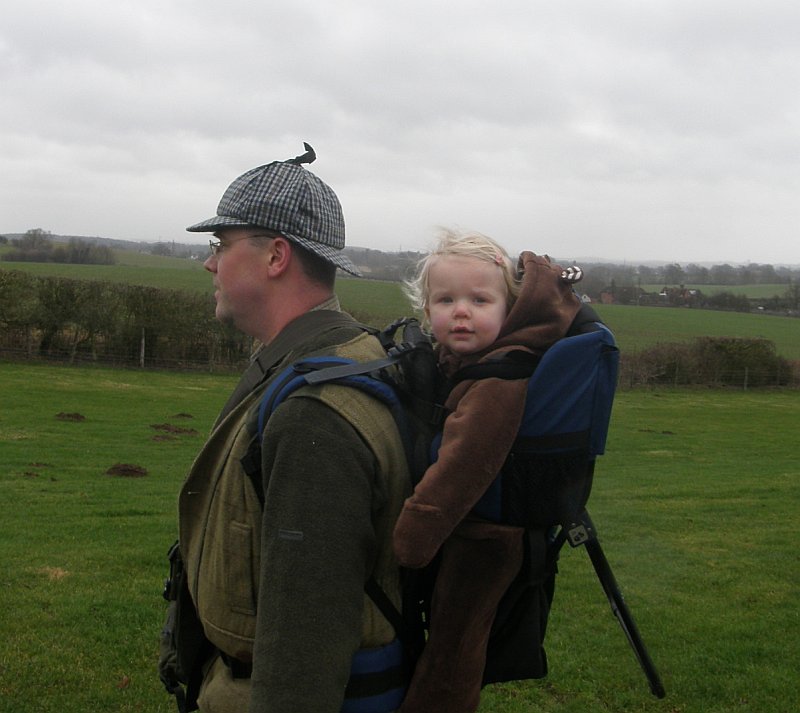
Getting up to the wood presented a bit of a challenge.  Mrs BWM has been away for the weekend for work, so that means if I was going to go to the wood, then Scarlett was going to come with me.  The all-terrain baby buggy is good, but I didn’t fancy lugging it over fallen trees in the wood.  Besides, it’s been raining a lot this week and the fields around here resemble a Flanders battlefield in 1917.  It was time to try out a new piece of kit – a backpack baby carrier that a friend had kindly given us.  It was surprisingly comfortable to carry – I’m used to carrying a big rucksack after years of backpacking – and Scarlett enjoyed peering out over my shoulder.  All in all it proved a very effective way of covering rough ground.

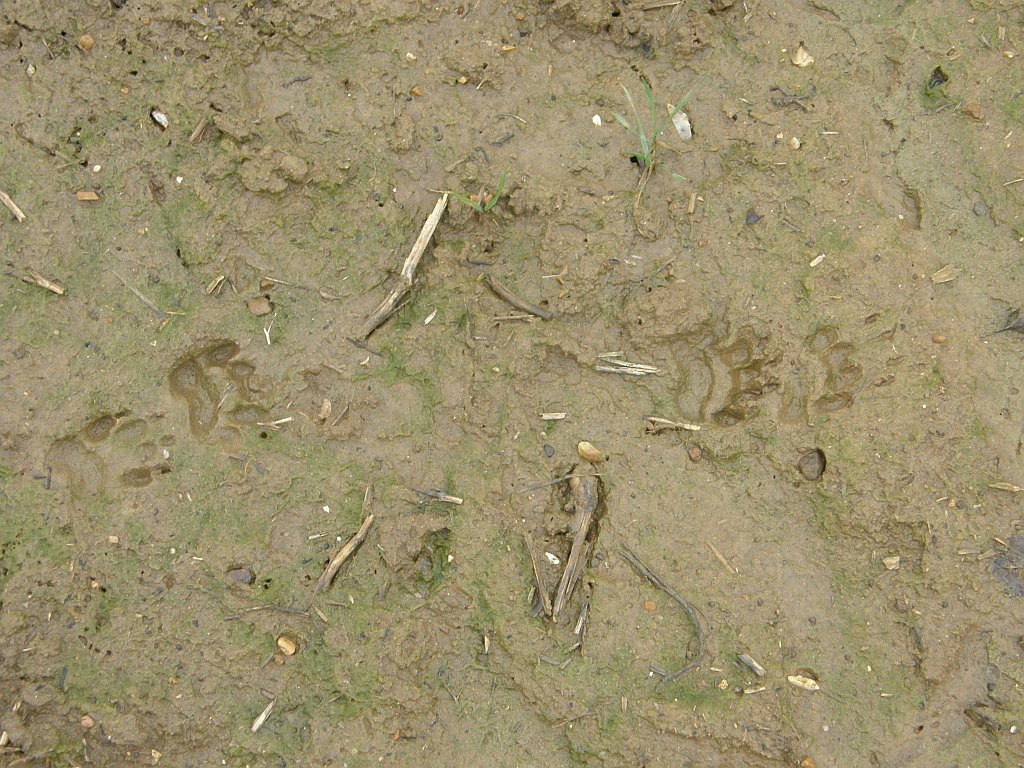
badger tracks in mud

Badger tracks in mud - note the heel pad, which rarely shows up on firmer ground

The mud was deep and claggy but it showed up tracks beautifully.  The badgers had been out in force, with badger tracks literally covering the ground at the entrance to the wood.  So far so good – the badgers are there and they’re active.

The sett itself showed similarly encouraging signs.  The badger paths were all well-trodden and the dung pits were well-used.  Six of the sett entrances showed significant signs of use, both tracks and spoil from recent excavation.  Interestingly, I did a similar survey almost exactly a year ago, and different holes were active then than are active now.  Most of the active holes were at the east end of the sett, with only the main hole at the west end showing signs of use.  This is not necessarily anything to be concerned about.  I’m getting used to the idea that badgers move regularly between holes at the sett, even though I still don’t know why they do it or what determines which holes they use.  I have an idea that it is related to clan relationships and hierarchy, but I’m a long way off proving it or even providing a working hypothesis.  One day the pieces of the puzzle will fall into place.

Active badger hole

Active badger hole - fresh spoil and no dead leaves

Overall, it was a useful visit.  The badgers seem to be active and there were no signs of disturbance or visible casualties.  I’ll try to get a nocturnal session up here soon and see if I can’t observe the badgers themselves.

Rattus Norvegicus

As you’ll have gathered, I’m interested in my local wildlife.  This means that I go out and try to find different species.  Sometimes, however, the wildlife comes to me.  And it isn’t always welcome.

Yesterday, our cat, Mayfield, caught a young rat.  This is fine – this is part of her job, keeping the vermin under control.  However, instead of killing it she brought it alive and kicking into the house.  There followed 24 hours of the most relentless battle between man and beast since Ahab vowed vengeance on Moby Dick.  After moving countless pieces of furniture and several near misses (rats can jump surprisingly high when pressed) I managed to finally corner and trap the little horror.  The damned cat was no help whatsoever.

Normally, any rat caught on the property would be summarily despatched – no last meal, no final cigarette, nothing.  Unfortunately they are vermin and they need to be controlled.  But after chasing this one for so long I’d built up a grudging respect for it and in a fit of sentiment I took it outside and let it go.

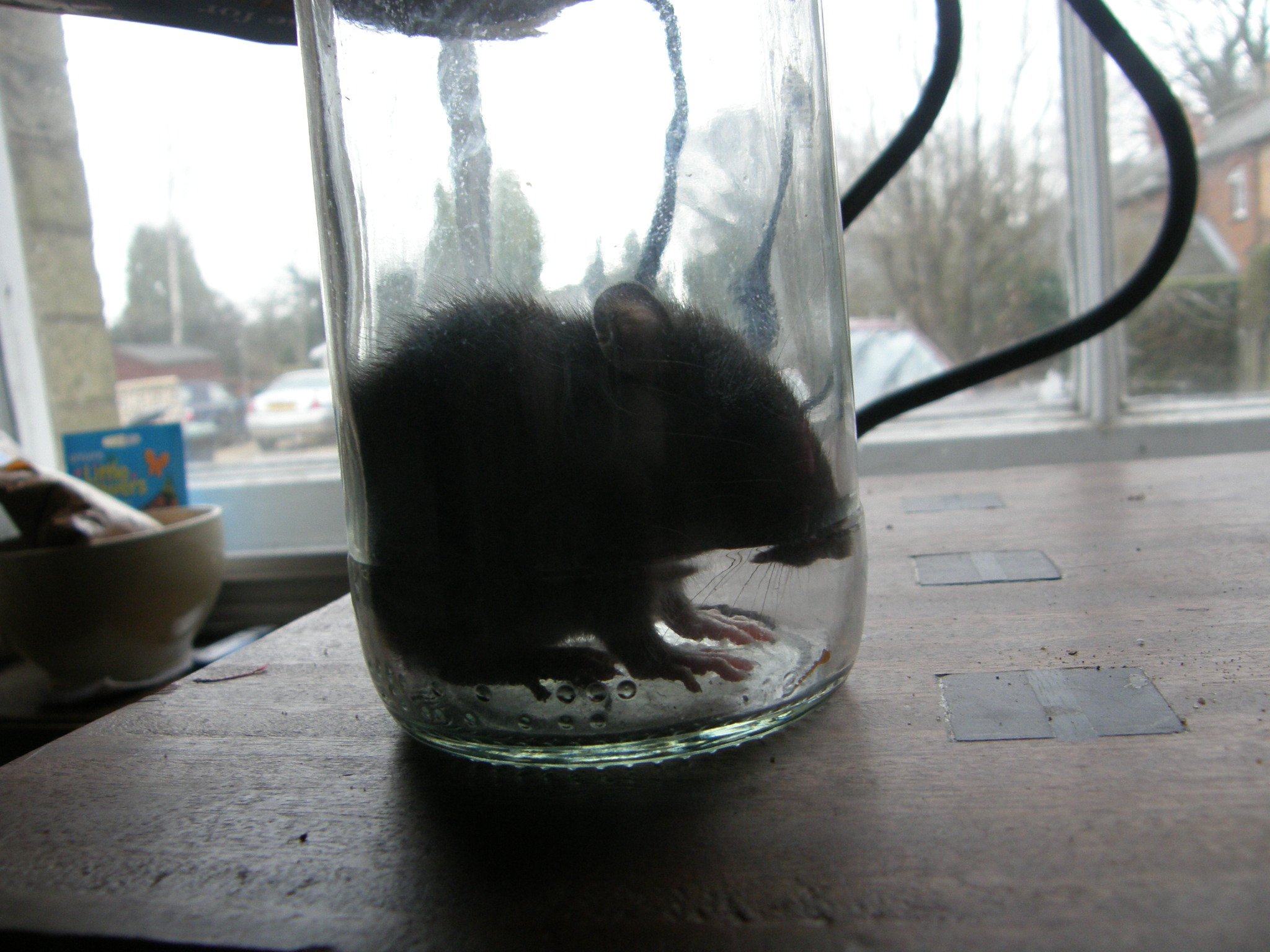
So here you are, a new species for the blog – Rattus Norvegicus – the Brown Rat.

Rattus Norvegicus - the Brown Rat

Rattus Norvegicus - the Brown Rat

They’d be an interesting species, if it wasn’t for the fact that a) rats are nasty, disease-carrying beasts (leptospirosis anyone?), b) I don’t want them anywhere near me or my chickens, and c) I certainly don’t want one living with me in my house.  But any amateur naturalists should make a point of reading Rats: A Year with New York’s Most Unwanted Inhabitants by Robert Sullivan, which describes how he studied the rats in a single alley in Manhattan.  If you ever feel that there’s no wildlife where you live, this book is an inspiration.  But I still don’t want one in the house.

A badger!

I commute into work on the train so I drive to the station each morning.   Instead of driving the quick way on the main roads I get up a little earlier and drive a longer route along the country lanes.  I like this – there’s always a chance of coming across the local wildlife on the quieter roads and in the woods and I feel that I get out into the proper countryside every day, even on workdays.  On most journeys I’ll see something – a muntjac, a chinese water deer or a hare.

But this morning, after a year and a half of driving this route, I added a new species to the list.  As I drove up the lane about a mile from home, there was a badger, trotting along happily at the side of the road.  This was at 6.30 this morning, so it was late for a badger to be out foraging, but it had been a mild, damp night so it was perfect conditions for catching worms.  Maybe it stayed out to make the most of it.

I’ve never seen a badger around here before, but it was next to a large patch of (unfortunately private) woodland, so I guess it lives close.  Apart from adding a little to my badger map of the area it was good to see one of the beasts again.  It’s the first live badger I’ve seen since September.  I feel like a proper Badger Watching Man again.