Feeds:
Posts
Comments

Badger Watching MeA hare paced around the pasture field as I walked up to the wood. I don’t think I’ve seen one here before so I took it as a good omen.  As I crested the top of the hill I disturbed a flock of (I think) lesser black-backed gulls.  Odd to see them here in Bedfordshire, miles away from the sea, but apparently they are the most inland of all the gulls.

I was keen to see the badgers at the main sett.  Partly because I haven’t had time to get up to the wood lately, and I need to watch badgers.  It’s what I do.  It’s my identity.  ‘Dead-Polecat-Picking-Up-Man’ doesn’t have quite the same ring to it!  More seriously, we’ve had three weeks of hot, dry weather.  This isn’t great for badgers as it makes earthworms harder to catch, so prolonged dry spells can put them under pressure to find enough food.

And to be honest, I haven’t really got a handle on the badgers this year.  In previous years they followed a broadly predictable pattern – cubs, social groups, mutual play and so on.  Maybe it’s because I haven’t spent as much time with them, but I have only seen mostly single badgers with none of the social behaviour I’ve got used to.  A couple of years ago I could count 12 badgers at this sett.  This year the most I’ve seen is 4, and that was in March.  I’ve seen no cubs. Either they’re staying hidden or the group is a lot smaller this year.

Whatever.  That’s the bigger picture.  To be honest it was nice to sit in a tree on a warm evening and listen to a woodpecker yaffling somewhere close by and the sheep bleating in the field.

At 8.20pm I heard faint sounds of badgers whickering and playing at the east end of the sett.  This was good.  It meant that there were at least two badgers and they were sufficiently happy to spend time and energy playing.  Of course, I could see nothing through the undergrowth.  I debated climbing down from my tree and trying to get closer, but there wasn’t really anywhere better to watch from.  I stayed put.

Twenty minutes later, three badgers ambled into view and foraged in a fairly relaxed way through the undergrowth.    One badger came up to the base of my tree and gathered Dog’s Mercury and dead leaves for bedding, shuffling backwards with its bundle back to the central sett entrance.  Here’s a short video:

Badgers obviously drag the bedding backwards all the way down the sett to their sleeping chamber because they tend to come out with their fur brushed backwards, showing the paler underfur.  By 9.15 the three badgers had ambled off deeper into the woods and I headed home myself.  The badgers seemed happy and healthy and not particularly stressed, which was good.  On the other hand, I only saw three of them.  I’m starting to think that there are only three or four badgers at the sett at the moment, and no cubs.  The sett hasn’t been disturbed, as far as I can tell, and I haven’t seen any dead badgers, so I don’t think they’ve met with any catastrophe.  I’ll try and get to the wood one morning so I can have a good look round without disturbing the badgers and see if I can find anything that may explain their reduced numbers.

I could be wrong, of course.  It is notoriously difficult to count the number of badgers in a sett.  I may see a dozen the next time I watch them.  But I don’t think so.  I think there really are much fewer of them this year.  What can cause a sett of 12 badgers to reduce to 3 or 4 in a couple of years?  Are they dead?  Have they moved away? Perhaps I need to have a look at the neighbouring setts and see how they’re doing.  Perhaps this mystery can only be solved by understanding the whole network of clans in the area, not simply by studying one clan on its own.
Good news from the Badger Trust…

Campaigners were celebrating today as the Court of Appeal handed down judgment finding the proposed Welsh badger cull to be unlawful on all three grounds they raised on appeal.

On 5 July, the Welsh Ministers had conceded the appeal on the basis of one of three grounds: that the 2009 Order which permitted culling in the whole of Wales (even in the many areas where TB is not a problem) was not supported by evidence and was unlawful as a result.

However, the Court of Appeal today ruled that the Welsh Ministers had also acted unlawfully in misinterpreting section 21 of the Animal Health Act 1981 as giving them power to cull if they could achieve a potential reduction in TB which was merely more than trivial or insignificant. They also unlawfully failed to carry out a balancing exercise to weigh up the harm involved (i.e. killing over 2,000 badgers) against the potential benefit (which the Minister’s own model predicted to be a reduction in the rate of cattle herd breakdowns of just 0.3% of farms annually).

David Williams, Chairman of the Badger Trust, said: “We are delighted with this outcome. We are grateful to all the badger groups and supporters whose donations and encouragement made this crucial legal action possible.

“Of all the wildlife organisations the Badger Trust exists to secure the welfare of our native protected species, the badger, and we will continue to do so through lawful means. We are pleased to see that the protection offered by wildlife law cannot be vitiated by political smoke and mirrors and that the court saw the issues so clearly. We also note the court’s criticism of the Welsh Ministers’ failure to reveal their advice without heavy redactions.

“Scientific evidence about the futility of killing badgers to control bovine TB remains exactly the same. Although some farmers may see this judgement as a setback, the massive body of rigorously peer-reviewed literature shows that killing badgers can play no meaningful part in the eradication of bovine TB and that robust cattle measures are sufficient, as demonstrated by the fact that the rate of increase in new TB outbreaks is already starting to slow. We also hope that the Minister will now adopt a strategy of vaccination as a cost-effective, viable alternative.”

Congratulations to the Trust on their victory for common sense.  They’ve worked hard for it and they deserve thanks.

“You know my method. It is founded upon the observation of trifles.”

Sherlock Holmes

.

Here’s another piece in the jigsaw puzzle of my tracking the stoats in my neighbourhood.  I took a stroll through the field behind my house this evening.  I didn’t see any stoats, and my carefully smoothed patches of loose sand showed no clear tracks.  But I did find something very interesting indeed.  It goes to prove my maxim – ‘there’s always something to see, even when there’s nothing to see’.

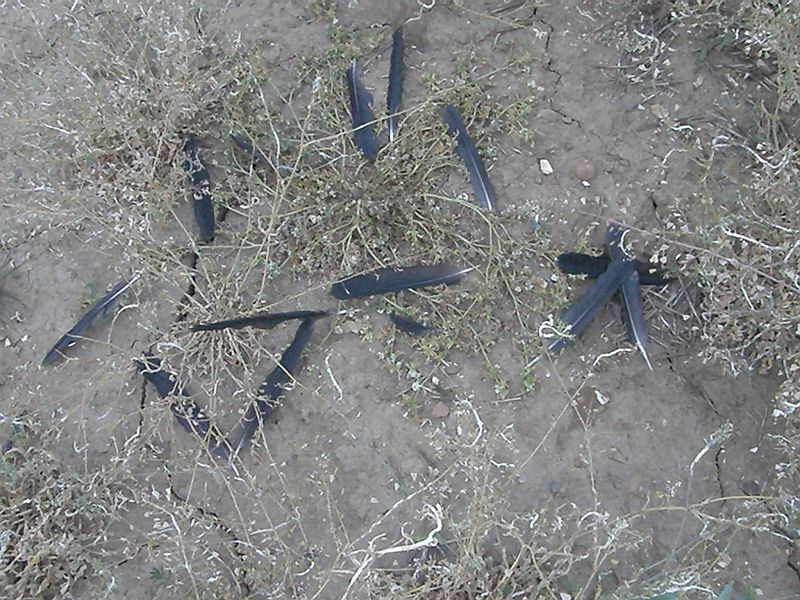
What I found was a patch of black feathers, evidently from a crow.

Crow feathers - feeding signThe crow had obviously met a sudden end to have lost this many feathers, presumably from a predator of some sort.  Nothing too unusual there – we have a lot of crows around here.  But can we tell what predator was responsible?

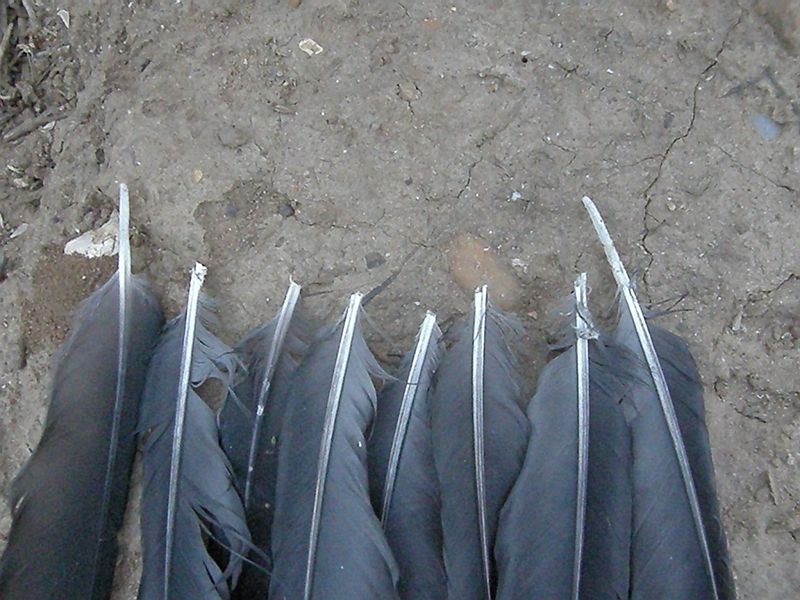
A close look at the feathers gives us a clue.  The quills of many have been bitten off cleanly near the bottom.

Feathers with bitten-off quillsA look through the guidebooks when I got home confirmed my suspicions.  A bird of prey will remove the feathers from a bird that it has killed, but it does so by grasping them in its beak and pulling them out.  The feather gets mangled, but otherwise stays in one piece.  These feathers were bitten off so it was no bird of prey that did this.

Stoat feeding sign on feathersNo, the guidebooks were clear on this point.  Both the Hamlyn Guide and Bang and Dahlstrom agree that bitten-off feathers are the work of a mammal.  According to the Hamlyn Guide ‘Small carnivorous mammals, such as mustelids, bite the feather off so that most of the quill is missing. Larger carnivores pull out mouthfuls of feathers.’  Bang and Dahlstrom go one stage further and have an illustration of a feather that has been bitten off by a stoat (page 159), and it is identical to the ones that I found.  I’m pretty confident based on the guidebooks that a stoat was the culprit here.

Alongside the scats I found the other day, this is more evidence that a stoat  is in residence in this corner of the field.  Sooner or later I’ll catch sight of it.  In the meantime I’m having great fun finding these little signs of its presence.

I must confess that I’ve been taking advantage of the long, warm evenings to sneak out after work for a quick walk around the field behind my house.  I’ve been hoping to find stoat tracks or, even better, catch a glimpse of the stoat itself.

Unfortunately I’ve had no luck with the stoat, nor with the tracking.  The ground is baked too hard for me to make out any clear tracks.  I’m pretty hefty, and even I barely leave a mark on the rock-like clay.  I can find patches where the dust has been disturbed but I have no idea what has passed by.  Something as small as a stoat would leave very little trace.

But one of things about a field like this is that there’s always something to be seen if you look.  I mentioned that the field is on the regular beat of a badger.  I haven’t seen its tracks lately, but I did find one of its feeding signs – a dug-out wasps’ nest.  Badgers are (as far as I know) the only animals that will do this.  They aren’t after the adult wasps, but the juicy, protein-rich larvae.  Dry spells, like the one we’re in now, aren’t good for badgers.  It’s harder for them to find and dig up worms so they need to look for alternative sources of food.  Wasps’ nests are ideal.

Wasps nest dug out by a badger 1This one must have been dug out last night.  I walked past here yesterday evening and there was nothing to see.  There were still some wasps in the nest, but it had been quite comprehensively dug out.

Wasps nest dug out by a badger 2I didn’t get too close.  I have no desire to be stung by a wasp.  I suffer from an allergy to wasp stings that makes me swell up like a balloon, which accounts for why I hate the little horrors.  Badgers obviously have no such problems.  Some people have speculated that their thick fur protects them from stings to some extent.  As far as I’m concerned, they can eat all the wasps they want…

Summer sunsetIf you’re looking at this page in the hope of reading about badgers, I’m sorry.  I’m afraid I’ve been very busy lately.  We had Scarlett’s Christening on Sunday, and a very pleasant day it was too, but it did take a certain amount of time in preparation.  I haven’t had a chance to see how the badgers are doing lately.  All I had time for over the weekend was a gentle stroll in the field behind my house.

The field behind my house is in most respects an ordinary field, much as you would find anywhere in lowland Britain.  It is a big field, about a quarter of a mile on each side.  A road runs up the south side, a hedgerow and a footpath on the west, another footpath and a small copse on the north. The hedges are interspersed with grand old oak trees.  My house and garden is on the east.  The hill is on a low rise, the soil on the lower slopes being sand with clay; on the higher slopes it is almost pure sand.  At the moment the field is under oil seed rape, but it was under wheat last year.

It’s an ordinary field – you probably drive past hundreds just like it – but it’s special to me because it is next to where I live.  More than that, though, I’m always surprised by the wildlife that either lives in or passes through it.  I regularly track a badger that walks a beat up the northern path.  The edges of the field are home to numerous rabbits, and the runs and latrines of voles can be found in many places.  Chinese Water Deer are common inhabitants (invisible now that the rape has grown up) as are muntjac near the hedgerows.  A herd of fallow deer passes through every week or two, and we even have the odd roe deer, quite a rare species here in Bedfordshire.

This is what makes it special.  It’s an ordinary field but I’m starting to learn its secrets.  I’d recommend this to anyone.  Find a local patch, even if it’s in a park or a piece of scrub, and keep visiting it.  I guarantee you’ll be amazed at the wildlife it holds.

It’s been gloriously sunny for almost three weeks now.  The ground is parched (as is my vegetable garden) and baked hard.  A better tracker than me, or one with more patience, could maybe track animals in the dust, but I had neither the time nor the skill on Sunday evening.  I think I’ll have to get out one evening and just spend an hour or so lying down and looking at the ground.  I’ve found that when tracking it always takes me a little while to ‘get my eye in’.  It isn’t something you can rush.  The neighbours will think I’m even more mad than usual, but an evening of lying in a field sounds quite enjoyable at the moment.

One thing that I did come across on my stroll was quantities of dung.  I suppose I should use the correct tracker’s term and call it scat.  Usually I only see the scat of rabbits, voles and foxes in this field.  Fox scat is quite distinctive because they tend to leave it in conspicuous places as a territorial marker – on a rock, a molehill or a tuft of grass.  But on Sunday I came across some new scat that I hadn’t seen before.  The scale in the pictures is in cm.

Unknown scat 1

It was from a carnivore.  You tell that by the thin shape and the pointed ‘tail’ at the end.  It was similar in shape to a fox’s, but much smaller.  There were five or six individual droppings spread out over an area of a few square yards at the top of the field.

Unknown scat 2Taking a stick, I teased one apart (first dead polecats, now poo.  I get through so much anti-bacterial handwash you wouldn’t believe it!)  The scat was composed entirely of hair.  It looked like rabbit hair to me.  There were no bones, so whatever made it hadn’t been eating mice or voles.  I’d expect to find bone fragments if they had.

Unknown scat 3Why so much fascination with animal poo?  OK – follow my reasoning here.

The animal that left these was a carnivore.  It was significantly smaller than a fox, and it had been eating rabbit regularly.  I’m familiar with domestic cats, and it didn’t come from one of those.  This narrows it down to one of the small mustelids – weasel, stoat or polecat.  There are no other possible predators it could be from.

Weasels will eat rabbits, but they more commonly prey on mice and voles.  Since there were no mouse or vole bones in the scats I examined, I think we can rule out weasel.  Besides, they were a bit big for a weasel scat.

That leaves polecat or stoat as the only serious candidates.  Both of these will take rabbits regularly, particularly stoats.  The Hamlyn Guide to Animals – Tracks, Trails & Signs has this to say about stoat scat:

‘Dark, irregular and elongated.  They are 4-8cm long and there are characteristic twists of fur at each end of the faeces, which are coiled and twisted within themselves.  They have a strong, musty smell when fresh but weather to an odourless grey with time.  They contain a wide variety of mammal, bird and reptile remains’

And polecats:

‘Slightly coiled, often twisted and with tapering ends.  Up to 7cm long, about 0.5cm in diameter.  Contain bone and fur fragments.  Often in regular latrines’.

Very interesting. Either of these could fit the bill perfectly.  My money would be on the stoat, simply because they are much more common than polecats.  I’ve been fascinated by stoats for ages, and I’ve love to get a good look at one.  Based on the evidence, it seems that I’ve at least one stoat resident in the field behind my house.

And this is the point of this post really.  It shows what can be discovered if you’re patient and prepared to look.  I had a gentle stroll on a summer evening and by the end of it I had strong evidence of stoats in the neighbourhood.  OK – I had to sift through a certain amount of animal poo to find it, but it was there.  Now I have a spot I can focus on and hopefully get to see the stoat properly one day.  As I always say, the wildlife is out there.  It’s just a question of finding enough pieces of the jigsaw.

After I described my roadkill polecat (I’ve had it confirmed as a ‘pure’ polecat by the County Mammal Recorder, by the way) Pablo took the time to comment, saying “I suppose you didn’t take its pawprints before you disposed of it?

Pablo – I like the way you think!

As a tracker you get used to seeing partial or distorted prints, and for many of the rarer ones you’re never quite sure what made them.  The chance to get perfect prints from a known species is too good to pass up.  Well, I didn’t take pawprints but I was on the same wavelength as Pablo.  I took pictures instead.

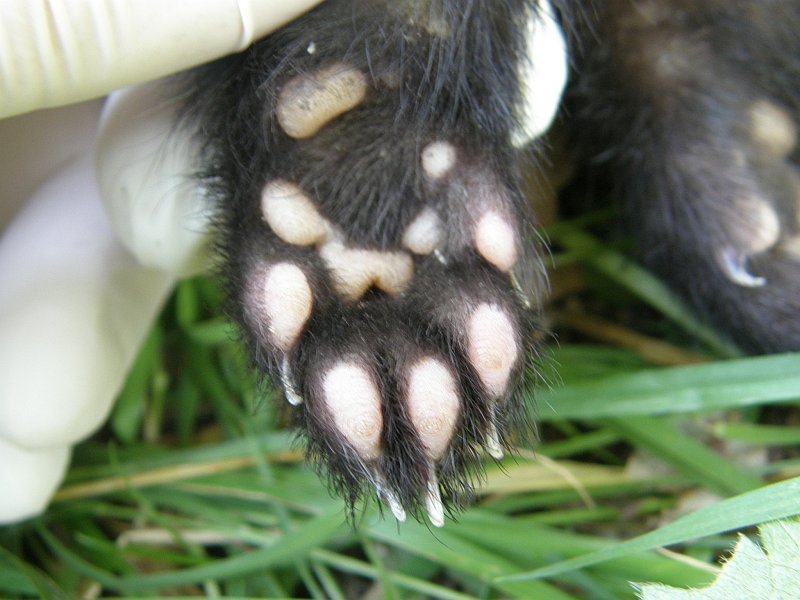
Here, for the record, is what a polecat’s paws look like.  Here’s the fore paw:

Polecat fore (front) paw

Polecat fore (front) paw

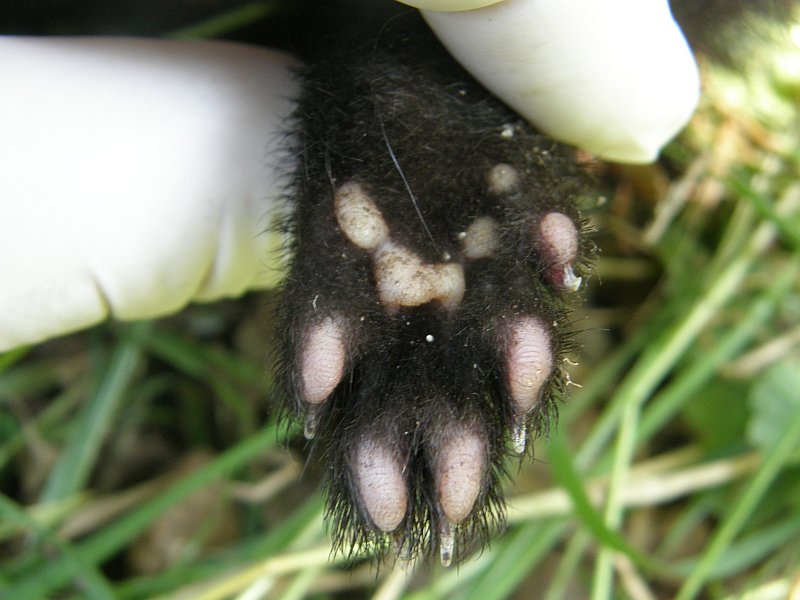
Here’s the hind paw:

Polecat hind (rear) paw

Polecat hind (rear) paw

Note the five toes on each foot.  Polecats are members of the mustelid family, just like badgers, and they share the same basic foot structure.

Here’s a badger foot for comparison:

Badger fore paw

Badger fore paw

So, now we know what we’re looking for, it’s time for us all to go out and start looking out for polecat tracks.  That’s the beauty of tracking – it allows you to find out about the local wildlife without needing to see the animals yourself.  It’s a great tool for the naturalist to have.

I’ll keep you posted on my results.

In yesterday’s post I described how I came across a polecat that had been killed on the road just outside our village.  Polecats still being quite rare in these parts, I was quite pleased to have found one so close to home (obviously the circumstances were less than ideal from the polecat’s point of view).  I ended by saying I’d like to see one some day.

Well, this morning I drove to the tip again (I told you it was a regular activity for me) and as I neared the spot where I found the dead polecat, a live one ran across the road in front of me.  It paused to sniff at a parked car and then disappeared into the woods at the side of the road.

It was definitely a polecat, or at least it was definitely the same species as the one I examined yesterday. A beautiful, lithe, sinuous creature.  If I was pleased to see a dead polecat, I was positively ecstatic to see a live one.

It goes to show that where there’s one animal from a species, there will be more.  Fair enough, this was only a fleeting view, but it’s a start.  The next stage will be to try and observe a polecat properly, and to get a photo or two if possible.  Given my lack of success with finding and watching the polecat’s near relative, the stoat, this may be difficult.  In theory, knowing the area where they live, the best thing would be to find a spot with plenty of rabbits (the main prey) and sooner or later I should be rewarded with decent polecat sighting.

And do you remember BBC Springwatch last year?  Simon King (my hero!) had waited 46 years to see a polecat.  With the finest camera equipment available (including multiple night vision cameras), a whole team of people and the pick of polecat hotspots to choose from, it still took them the best part of a week to get any good footage.  Never mind.  One of the good things about being a (very) amateur naturalist is that I’m in no hurry.  I have no deadlines to meet, no live programmes to fill.  It may take a while, but sooner or later I’ll get that picture of a polecat.

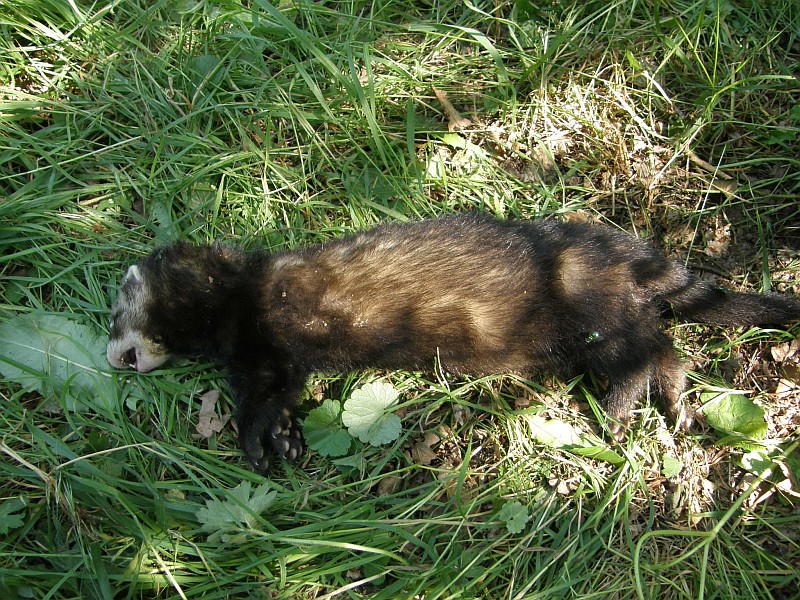
Polecat road casualty in BedfordshireThis morning I was driving to the tip with a load of rubbish (a regular weekend activity when you’re renovating an old house) when I noticed a dead animal on the road about a mile and a half away from my house.  Dead animals are pretty common around here, mostly rabbits and pheasants with the odd muntjac or chinese water deer too.  This animal was different though.  It tells you something about my character that I stopped the car and walked back for a look.  My curiosity overcame my general repugnance at looking at a dead animal on a hot summer day.

I’m pretty sure that the animal was a polecat.  The polecat is one of the success stories of British wildlife, in a slightly topsy-turvy way.  Once commonplace, they were wiped out from most of the country until by the 1930s they were limited to mid-Wales.  Since then, with the decline of gamekeepers and large-scale shooting estates, the polecat has been re-colonising England, and the speed of their spread eastwards seems to be increasing.  Most of our knowledge of polecat distribution in the UK comes not from sightings but from road kills – they’re quite an elusive and inconspicuous species.  Polecats are not unknown in Bedfordshire by any means (my wife saw one crossing a road last year), but they aren’t common either.

This animal had the classic ‘bandit mask’ dark markings around the eyes that are characteristic of polecats. However, Polecat facial markingshaving never seen a polecat before I can’t be 100% sure.  The problem is that escaped ferrets (which are basically domesticated polecats) will revert to polecat-like colouring after a few generations in the wild.  These are known as ‘polecat ferrets’.  But let’s be realistically optimistic about this.  Polecats are expanding across the country and there are confirmed records of them in Bedfordshire.  Unless someone more expert than me can give me evidence to the contrary, I’m going to assume that this animal was a real, bona fide polecat and this means that polecats are established in my local area.  It isn’t a major scientific breakthrough, but it’s another piece in the jigsaw of our local wildlife, and it gives me hope that I might see one in the wild one day.

Incidentally, I don’t really think I should be encouraging people to start messing around with dead animals by the roadside, but if you really do want to, please make sure you stay safe.  Always, always watch out for traffic, and if the road isn’t safe then don’t put yourself at risk.  You’d look pretty daft ending up as another casualty alongside the animal you’re supposed to be looking at.  And please do follow some basic precautions if you want to handle dead animals.  I keep a box of disposable gloves and a bottle of hand sanitiser permanently in my car for just this sort of situation.  Don’t even think about handling wild animals without them.

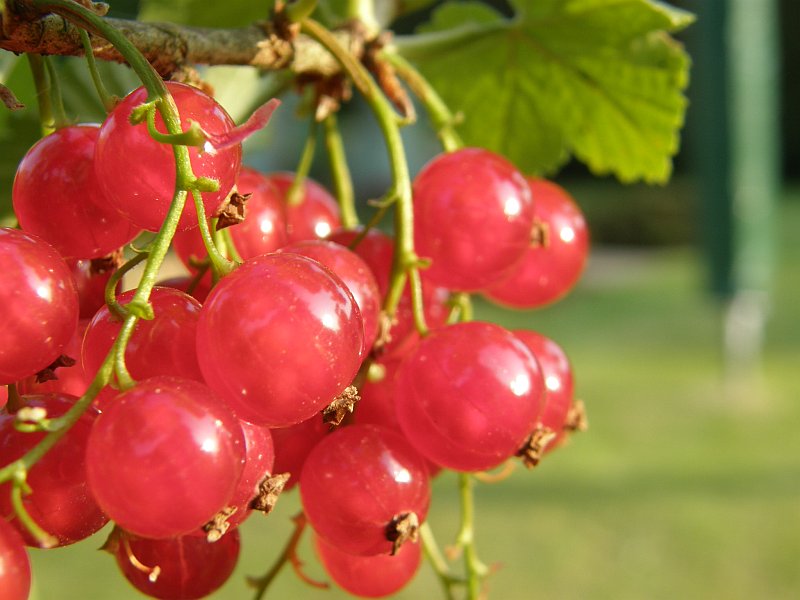
Redcurrants

RedcurrantsToday we picked our redcurrants.  Last year we went away for a weekend and came back to find that the birds had eaten every last one of them – little sods.  This year we netted them against the birds and got a bumper crop (although the local blackbird was circling us like a hungry shark even as we were picking).  Redcurrants are beautiful to look at as well as to eat – a lovely, translucent red; and for the small amount of space and effort they need we get a great return of fruit from our three bushes.

In total we got just over 7lbs with enough left on the bushes to keep the birds happy.   Time to find a recipe for redcurrant jelly…

I’ve been busy lately – working in the garden and down in Wiltshire for the solstice – so I haven’t had a chance to get out to the woods for a couple of weeks.  However, I’d like to get a few minor experiences on the record.  They aren’t really enough for a post on their own, hence I’ve brought them together into a collection of short tales.

A Very Regular Owl

Tawny Owl on the RoofEvery summer we get a visit from the local tawny owl.  We have a lot of tawny owls in the area.  For the last three years there has been a nest in a small copse about a quarter mile from our house.  You can year the young owls (owlets?) calling as they start to fly from the nest.

This is a picture of the owl that sat on our roof on June 12th.  Looking back through the archives, I note that I had taken similar pictures of the owl on June 12th 2008 and June 2nd 2009.  It isn’t a very frequent visitor, and it only seems to come in early June.  Clearly an owl of very regular habits!

So why does it only visit the house at this one time of year?  Is it something to do with having young in the nest?  Or is it that I only see it in the long evenings of June?

A Family of Wrens

I was walking through the wood the other day when I disturbed a family of wrens.  They were obviously nesting in an ivy-covered tree stump.  As I walked past, three of the tiny birds flitted out and perched on nearby trees, apart from one of them which perched on my arm.  It was only there for a few seconds (long enough to poo on my sleeve!) but it was fantastic to have one of these delightful little birds so close.  Thinking about it afterwards, I was in a fairly remote part of the woods and the wrens had quite possibly never seen a human before.  Truly a new experience for both of us.

The Bedfordshire Red Kites

Regular readers may remember my quest to see Red Kites in our village.  I haven’t seen them for a while.  I don’t know if this is because they haven’t been in the area or because I haven’t been out and about so much since Scarlett arrived.  Anyway, I was pleased when my wife came home last week to say that she’d watched one of the kites as it glided low over the end of our road.  I’ll have to make an effort to get out more and try and get a photograph, but at least I know they’re still in the area.

Graveyard Hedgehog

I have a soft spot for hedgehogs.  We still get one coming into the garden occasionally (I see the poo on the lawn) but I don’t see them very often out in the wild.

I was walking through the churchyard in the village the other evening.  It was about 7.30pm and still very light.  There, sitting on the path in front of me was a hedgehog, large as life.  Before I could take out my camera it had raised itself up on its little legs and trotted off to a gravestone by the path.

This gravestone dates from the mid 19th century.  It’s a large horizontal stone slab, raised up on blocks on each corner like a low stone table, about 4″ off the ground.  Without pausing, the hedgehog ran straight underneath it.

I lay down on the ground and peered in.  There was a clear run worn into the grass, and under the stone was a wide hollow space, clear and dry.  The hedgehog obviously has its home there, and a perfect home it is too.  I don’t know what the rightful owner of the grave (one Mr John Francis) would say about having a lodger, but the urchin isn’t doing any harm so I hope he wouldn’t mind sharing too much.

Incidentally, I was walking through the churchyard the day before and a kestrel flapped up from where it had been perched on the grave next to this one.  I assume that kestrels don’t hunt hedgehogs, so perhaps it was just a coincidence.  It seems that even in a pretty rural village like ours the old graveyard is still a haven for wildlife of different kinds.