Feeds:
Posts
Comments

Archive for the ‘Fieldnotes’ Category

Badger Watching MeA hare paced around the pasture field as I walked up to the wood. I don’t think I’ve seen one here before so I took it as a good omen.  As I crested the top of the hill I disturbed a flock of (I think) lesser black-backed gulls.  Odd to see them here in Bedfordshire, miles away from the sea, but apparently they are the most inland of all the gulls.

I was keen to see the badgers at the main sett.  Partly because I haven’t had time to get up to the wood lately, and I need to watch badgers.  It’s what I do.  It’s my identity.  ‘Dead-Polecat-Picking-Up-Man’ doesn’t have quite the same ring to it!  More seriously, we’ve had three weeks of hot, dry weather.  This isn’t great for badgers as it makes earthworms harder to catch, so prolonged dry spells can put them under pressure to find enough food.

And to be honest, I haven’t really got a handle on the badgers this year.  In previous years they followed a broadly predictable pattern – cubs, social groups, mutual play and so on.  Maybe it’s because I haven’t spent as much time with them, but I have only seen mostly single badgers with none of the social behaviour I’ve got used to.  A couple of years ago I could count 12 badgers at this sett.  This year the most I’ve seen is 4, and that was in March.  I’ve seen no cubs. Either they’re staying hidden or the group is a lot smaller this year.

Whatever.  That’s the bigger picture.  To be honest it was nice to sit in a tree on a warm evening and listen to a woodpecker yaffling somewhere close by and the sheep bleating in the field.

At 8.20pm I heard faint sounds of badgers whickering and playing at the east end of the sett.  This was good.  It meant that there were at least two badgers and they were sufficiently happy to spend time and energy playing.  Of course, I could see nothing through the undergrowth.  I debated climbing down from my tree and trying to get closer, but there wasn’t really anywhere better to watch from.  I stayed put.

Twenty minutes later, three badgers ambled into view and foraged in a fairly relaxed way through the undergrowth.    One badger came up to the base of my tree and gathered Dog’s Mercury and dead leaves for bedding, shuffling backwards with its bundle back to the central sett entrance.  Here’s a short video:

Badgers obviously drag the bedding backwards all the way down the sett to their sleeping chamber because they tend to come out with their fur brushed backwards, showing the paler underfur.  By 9.15 the three badgers had ambled off deeper into the woods and I headed home myself.  The badgers seemed happy and healthy and not particularly stressed, which was good.  On the other hand, I only saw three of them.  I’m starting to think that there are only three or four badgers at the sett at the moment, and no cubs.  The sett hasn’t been disturbed, as far as I can tell, and I haven’t seen any dead badgers, so I don’t think they’ve met with any catastrophe.  I’ll try and get to the wood one morning so I can have a good look round without disturbing the badgers and see if I can find anything that may explain their reduced numbers.

I could be wrong, of course.  It is notoriously difficult to count the number of badgers in a sett.  I may see a dozen the next time I watch them.  But I don’t think so.  I think there really are much fewer of them this year.  What can cause a sett of 12 badgers to reduce to 3 or 4 in a couple of years?  Are they dead?  Have they moved away? Perhaps I need to have a look at the neighbouring setts and see how they’re doing.  Perhaps this mystery can only be solved by understanding the whole network of clans in the area, not simply by studying one clan on its own.
Read Full Post »

“You know my method. It is founded upon the observation of trifles.”

Sherlock Holmes

.

Here’s another piece in the jigsaw puzzle of my tracking the stoats in my neighbourhood.  I took a stroll through the field behind my house this evening.  I didn’t see any stoats, and my carefully smoothed patches of loose sand showed no clear tracks.  But I did find something very interesting indeed.  It goes to prove my maxim – ‘there’s always something to see, even when there’s nothing to see’.

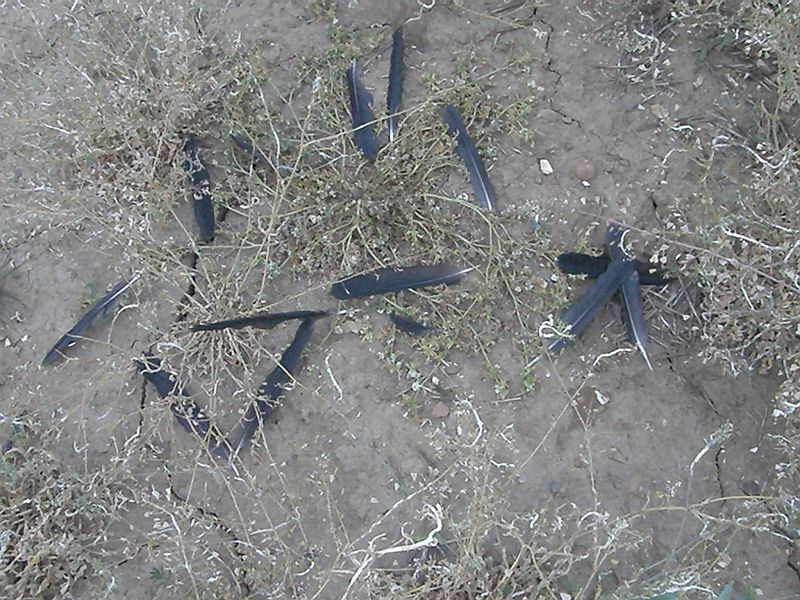
What I found was a patch of black feathers, evidently from a crow.

Crow feathers - feeding signThe crow had obviously met a sudden end to have lost this many feathers, presumably from a predator of some sort.  Nothing too unusual there – we have a lot of crows around here.  But can we tell what predator was responsible?

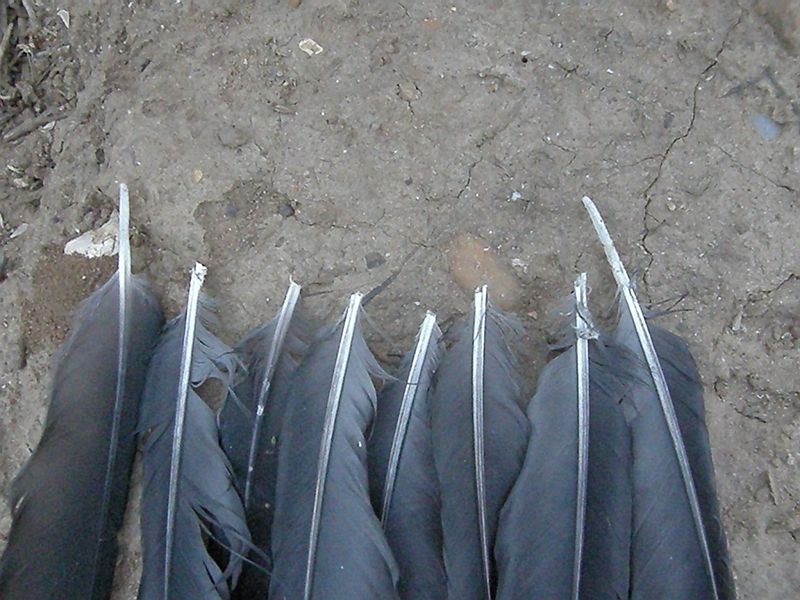
A close look at the feathers gives us a clue.  The quills of many have been bitten off cleanly near the bottom.

Feathers with bitten-off quillsA look through the guidebooks when I got home confirmed my suspicions.  A bird of prey will remove the feathers from a bird that it has killed, but it does so by grasping them in its beak and pulling them out.  The feather gets mangled, but otherwise stays in one piece.  These feathers were bitten off so it was no bird of prey that did this.

Stoat feeding sign on feathersNo, the guidebooks were clear on this point.  Both the Hamlyn Guide and Bang and Dahlstrom agree that bitten-off feathers are the work of a mammal.  According to the Hamlyn Guide ‘Small carnivorous mammals, such as mustelids, bite the feather off so that most of the quill is missing. Larger carnivores pull out mouthfuls of feathers.’  Bang and Dahlstrom go one stage further and have an illustration of a feather that has been bitten off by a stoat (page 159), and it is identical to the ones that I found.  I’m pretty confident based on the guidebooks that a stoat was the culprit here.

Alongside the scats I found the other day, this is more evidence that a stoat  is in residence in this corner of the field.  Sooner or later I’ll catch sight of it.  In the meantime I’m having great fun finding these little signs of its presence.

Read Full Post »

I must confess that I’ve been taking advantage of the long, warm evenings to sneak out after work for a quick walk around the field behind my house.  I’ve been hoping to find stoat tracks or, even better, catch a glimpse of the stoat itself.

Unfortunately I’ve had no luck with the stoat, nor with the tracking.  The ground is baked too hard for me to make out any clear tracks.  I’m pretty hefty, and even I barely leave a mark on the rock-like clay.  I can find patches where the dust has been disturbed but I have no idea what has passed by.  Something as small as a stoat would leave very little trace.

But one of things about a field like this is that there’s always something to be seen if you look.  I mentioned that the field is on the regular beat of a badger.  I haven’t seen its tracks lately, but I did find one of its feeding signs – a dug-out wasps’ nest.  Badgers are (as far as I know) the only animals that will do this.  They aren’t after the adult wasps, but the juicy, protein-rich larvae.  Dry spells, like the one we’re in now, aren’t good for badgers.  It’s harder for them to find and dig up worms so they need to look for alternative sources of food.  Wasps’ nests are ideal.

Wasps nest dug out by a badger 1This one must have been dug out last night.  I walked past here yesterday evening and there was nothing to see.  There were still some wasps in the nest, but it had been quite comprehensively dug out.

Wasps nest dug out by a badger 2I didn’t get too close.  I have no desire to be stung by a wasp.  I suffer from an allergy to wasp stings that makes me swell up like a balloon, which accounts for why I hate the little horrors.  Badgers obviously have no such problems.  Some people have speculated that their thick fur protects them from stings to some extent.  As far as I’m concerned, they can eat all the wasps they want…

Read Full Post »

“I think you’d better wear your waterproof jacket” said my wife as I headed out of the door this evening.  It was good advice.  It had been a beautiful, warm day but there were ominous banks of black clouds piling up in the west.  I hurried up to the wood as it grew darker and darker.  The weather forecast was for thunderstorms, and so far it seemed to be accurate.

There’s an old country rhyme about which trees are safe to shelter under during a thunderstorm:

Beware the Oak, it draws the stroke
Beware the Ash, it draws the flash
But under the thorn, you’ll come to no harm

I thought about the rhyme as I walked through a mixed wood of mature oak and ash trees on the top of the tallest hill in the area.  I hoped it wasn’t true.

I settled down at the east end of the sett from a spot where the outer holes are visible across a small ravine.  The spot isn’t perfect – it’s not possible to see the holes in the undergrowth at the top of the small rise on which the sett lies, and it’s quite far away so you really need binoculars – but it’s the best place to get a view of this end of the sett.

I sat in the gathering gloom, with only the mosquitoes for company.  Mosquitoes don’t bother you when you’re in a tree, only when you’re on the ground.  I don’t think mosquitoes fly upwards very well.  My normal summer badger watching clothes include a thick moleskin shirt, thick cotton trousers and head net.  They can get a little warm, but they’re mozzie proof.  The trouble is, the little horrors go for exposed areas such as ankles and hands.  They even bite through socks and the thin camouflage gloves I usually wear.  I regularly wear wellies and thick fleece gloves in summer, not to keep warm but to protect myself from the mosquitoes.*

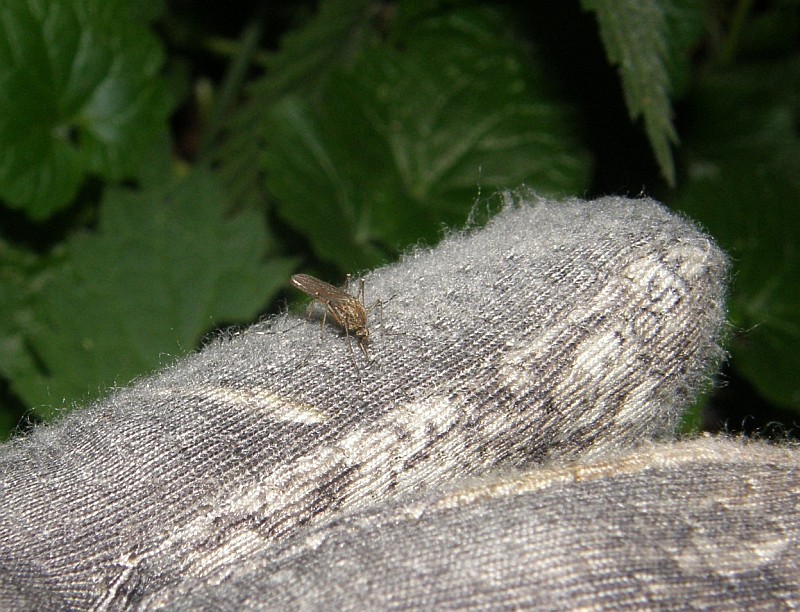
In a spirit of scientific recording (and having nothing else to do at the time) I photographed a mosquito biting me through my camouflage gloves.

Mosquito bitingAnd then I squished it.

At 8.16 a badger appeared from one of the visible holes.  It trotted quickly to the large latrine site and then hurried back underground.  By this time it was too dark for photographs.  At 8.30 another badger came out of another hole and did the same thing.  Ten minutes or so later, both badgers (or different ones) came out together.  There was still no real social behaviour: the badgers seemed distracted or on edge somehow.

At that moment the heavens opened with a downpour of epic monsoon proportions.  Both badgers disappeared underground, sensible beasts that they are.  I had no desire to stay in this sort of rain, so I left too.  At least there was no need for stealth – the noise of the rain drowned out any sounds I made.  I was feeling a little smug to be wearing my jacket but I still got soaked.  The footpath goes through a field of oilseed rape, which is chest-high and flopping over the path.  You don’t so much walk along the path as swim through the rape.  After the downpour it was like walking through a huge, green, soaking scrubbing-brush.  Soaked to the skin from the waist down I plodded home as the thunder rumbled overhead.  Never mind – I’m a rough, tough badger watcher and I can cope with getting a little wet.  Besides, it’s probably time my badger watching clothes got a good wash…

*In British colonial times, officials in India and Africa were issued with canvas ‘mosquito boots’ for just this purpose.  Perhaps I’ll see if they’re still made anywhere.

Read Full Post »

Today was the day of the long-awaited first England game of the World Cup.  All over the country, people have been putting flags on their cars, buying HD televisions and stocking up with crates of lager.  After weeks of anticipation, England faced the US this evening and everything else came to a standstill.

I’ve never much cared about football myself.  Don’t get me wrong, I’d like England to win – I’m as patriotic as the next chap – I just have other things to do instead.  Most people think I’m mad for doing what I do.  Fair enough.  I think they’re mad for getting so worked up over a game.  Let’s just agree to disagree.

The weather was warm and clear, so while everyone else was glued to their TV sets, I walked through our eerily deserted village for an evening of lurking in the woods.  My badger watching has not been very successful this season, so I was pleased when a badger came out of one of the middle holes at 8.02pm.  It disappeared underground fairly soon after though.

At 8.16 another badger came out of one of the western holes, and again went back fairly quickly.  I don’t think I disturbed them. There was very little wind, and what there was, was in the right direction.  The badgers were just not interested in hanging around.

At 8.45 I saw the elder bushes in the centre part of the eastern end of the sett shaking and rustling.  Through the binoculars I could see another badger ambling around in the cover of the undergrowth.  Shortly after 9.00, the badger from the middle hole came out and headed off eastwards, followed a few minutes later by the one from the western hole.

It wasn’t a totally wasted evening.  I saw the badgers (or some of them, at least) and I know that they’re active in all parts of the sett.  But I still haven’t seen any cubs yet, and I haven’t seen any real social behaviour from the badgers this year.  In previous years they would sit around and play and groom together, up to twelve badgers in a big group.  This year I’ve only seen individual badgers with very little interaction.  They may be doing it out of sight, or there may be something odd going on.  I don’t know.  I’m still trying to get to grips with the badgers.  In football terms, let’s call the evening a draw.  Badgers 1 – BWM 1.

Read Full Post »

Where have all the badgers gone?
Long time passing
Where have all the badgers gone?
Long time ago
Where have all the badgers gone?
Hiding from me, every one
When will I ever learn?

(Apologies to Pete Seeger)

x

I promised myself that I wouldn’t go badger watching this evening.  I really did.  And yet somehow 7.45pm saw me sitting in my favourite tree looking out over the sett.  My recent visits had only whetted my appetite to find out what the badgers were doing and to check that they were OK.  Be warned – badger watching is addictive – don’t start!

The wind was in just the right direction, although a little strong, and I had high hopes that I’d see more of the badgers.  I was at the west end of the sett, facing a cluster of obviously active holes.  But the evening wore on, as they say, and no badgers appeared.  Finally, at 9.00pm exactly, I heard badgers whickering from within the undergrowth in the middle of the sett.  Even at this time of year, this tangle of nettles and elder forms an almost impenetrable screen and the holes inside it can’t be seen from any angle.  I caught a glimpse through the leaves of a couple of badgers that might, from their boisterous behaviour, have been cubs, but I wouldn’t like to bet on it.  If the badgers have taken up residence in this middle part of the sett it might explain why I haven’t seen much of them on the last two nights.

This movement of badgers within the sett is one of the big questions I have about badger behaviour, but after four years of watching and studying them I’m still no nearer to an answer.  The main sett I watch is a big one, with maybe a dozen or so active holes at any one time.  But the badgers move between these holes, not just from year to year but from week to week.  I’m sure that I could class the west end of the sett as an outlying sett to the larger east end, but it seems to have its own residents most of the time, just as the east end has too.  But are there really resident badgers in each end, or do they move randomly between them?  And sometimes, like now, the badgers will move to one end or the other.  What is it that determines which holes an individual badger uses, and why don’t they all live together all of the time?  I can understand pregnant sows moving away from the rest to have the space and security of their own burrow, but why is there this distribution across holes for the rest of them?  I suspect it has something to do with clan relationships and hierarchy, but I honestly don’t know.  Perhaps someone has done a study on it.  If I could reliably identify individual badgers I could start to understand it more, but I’m still rubbish at recognising them.

Anyway, there I was, sitting in my tree and getting colder as the light faded.  I didn’t fancy staying up there until it got dark with only a limited chance of seeing the badgers.  Sod it.  If the mountain won’t come to Mohammed, the badger watcher will have to go to the badgers.

I climbed down and crept as quietly as I could in a big circle around to a point where I could see the holes at the east end of the sett.  There were still not badgers in sight, but the odd yip told me they were still in the middle of the undergrowth somewhere.  The clouds were gathering and darkness was drawing in.  Defeated, I turned for home.

I am definitely not going badger watching tomorrow.  I’m going to do what normal people do for a change.  I’m going to stay at home, get a Chinese takeaway and sit and watch TV with my wife.

Read Full Post »

Any damn fool can be uncomfortable.”  So said a wise person once about roughing it outdoors.  In other words, the art is to make the experience as pleasant as possible, no matter what the conditions.  I heard this advice about 20 years ago and I’ve taken it to heart ever since.  I spent this evening up in a tree, sitting comfortably on an inflatable cushion and drinking hot tea from the flask, my camouflage umbrella close at hand in case of rain.  I was very comfortable indeed, thank you.  This was badger watching with style.  Unfortunately, having all the gear doesn’t make you a better naturalist, as I found out.

I was back at the west end of the sett, the opposite end to last night.  The holes at this end show lots of signs of activity: fresh spoil and pieces of discarded bedding.  Unfortunately, the badgers didn’t make an appearance from here.  I expected the badgers to appear about the same time as last night – 8.30pm or so – but no badgers emerged until 9.15 when a lone individual wandered out of the east end and disappeared into the wood.  I waited, but for a long 20 minutes no other badgers came out.  This was most unusual – I started wondering if something had happened to them.  Finally, another badger emerged from the centre part of the sett and slowly foraged away through the trees, occasionally snapping up worms or other tidbits.   After another 10 minutes, as it was getting dark, another pair of badgers came out of the middle hole.  No badgers came out of the holes at the west end, at least not before I left for home, and I didn’t see any cubs.

I’m not sure why the badgers were so late to come out. I don’t think I’d disturbed them.  It had been raining heavily all day, and badgers don’t like heavy rain (some people think this is because the noise of rain makes them nervous because it stops them from hearing what’s going on) but the rain had died off by the evening.  On the other hand, they do like damp nights because it makes foraging easier and more productive, so they should have been keen to get out and about.  All the signs are that the sett is happy and healthy, so perhaps it was just one of those nights.  Perhaps the badgers just decided to have a lie-in.

It wasn’t a wasted evening, though.  No evening in the woods is ever wasted.  The local buzzard was on good form, swooping through the trees and crying from the high branches.  A pair of fallow deer walked past my tree, browsing on the lush new foliage.  A fox (a healthy, non-mangy one) spent a few minutes sniffing around the sett before trotting off across the fields; and just before I left a tawny owl perched on a tree in front of me, calling for five minutes before gliding away, accompanied by the pink-pink-pink alarm calls of blackbirds.

A very comfortable evening, but as always seems to be the case, I’ll need to spend a few more at the sett before I find out what the badgers are up to.

Read Full Post »

I made a quick visit to the wood this evening, after work.  A pleasant, dry evening, with a cuckoo calling from the fields and a light breeze stirring the leaves.

On a hunch I sat out at the east end of the sett.  This is the less visible side of the sett, which is on a low rise in the ground so it is impossible to see right across it from this end, while the jungle of nettles and elder bushes obscures the centre of the sett.  The badgers could hardly have chosen a more private spot if they tried.  Nevertheless, there are a couple of active holes that are visible on the edge of the hill, plus a well-used ‘play area’, where the badgers have worn the ground smooth and bare of leaf litter.  I particular, they seem to like to run round and round one of the trees, judging from the polished soil.

At 8.35 an adult badger emerged from one of the holes and trotted off into the nettles in the centre of the sett.  It didn’t reappear, nor did any others.  After half an hour I called it a day and crept slowly off.  I didn’t see any cubs but at least I saw a badger – it’s been a while.  As a consolation I sat at the bottom of the pasture field and watched a fox wandering backwards and forwards hunting insects.  It was a particularly mangy individual, which is unusual around here.  I wonder if it is one of the cubs I watched last year?

Altogether a slightly frustrating evening, but enjoyable nonetheless.  There is something strangely pleasant about sitting quietly in a wood or in a field, even if you don’t see much.  I’ll go back to my usual spot at the west end of the sett as soon as I can and see if I can get a better view of things.

Read Full Post »

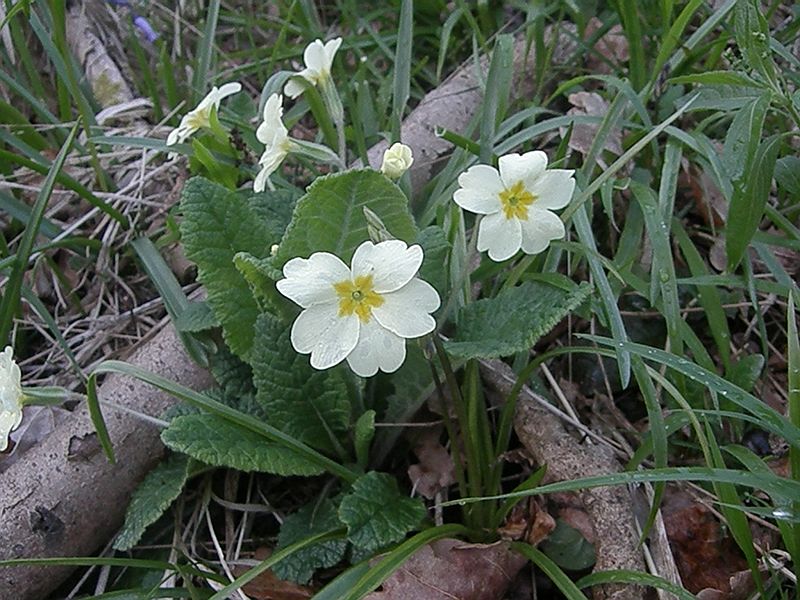
Primroses in the wood

Primroses in the wood

What a difference a couple of weeks makes!  I’ve been busy with various (non-badger) things for a couple of weeks so I haven’t been able to get out until last night.  But things have changed since I last went out to the wood.  The leaves on the trees are starting to show, the blackthorn is in full flower and the woodland flowers are blooming.  The weather is noticeably warmer (i.e. not freezing!) and the birds are starting to sing as they begin their search for a mate.

The wheat field that I walk through on the way to the wood is not a wheat field any more.  This year it is planted with oilseed rape and the first yellow flowers are already out (the field behind my house is rape too, and the scent this evening when I went out to feed the chickens is marvelous.  It can become overpowering later in the year but at the moment it smells like spring and its nice).  This field has been wheat for the last two years, and it’s been a food source for (I think) at least three different clans of badgers.  I wonder how it will affect them now the food source has gone?  I imagine that the badgers won’t be so keen to try to annexe it as territory, but I’ll see what happens.  Unless badgers each oilseed rape, of course…

I arrived at the sett at about 7.45pm.  The tawny owls hooted and ‘ke-wicked’ and the first woodpecker of the year yaffled away somewhere behind me.  It’s good to get back into the wood.  I spend so much time rushing about at work that it’s a real luxury to just sit and listen and watch and do nothing.

It is a good time of year to be watching badgers at the moment, for two reasons.  Firstly because the undergrowth has not yet grown up.  Later in the year the nettles and elder will block a lot of the views at this sett, but for now it is possible to look across the whole area.  Secondly, and more importantly, this year’s cubs will be emerging about now.  I can tell myself that I want to see cubs because it allows me to judge the success of the clan, but if I’m honest I want to see them because they’re cute, especially when they’re finding their feet outside the sett for the first time.

There were six active sett entrances visible from where I was sitting, so the badgers are still active.  At 8.15pm an adult badger emerged at the east end of the sett, followed a few minutes later by a second.  They groomed themselves and each other for a moment and then wandered slowly around the area.  Ten minutes later they were joined by another badger from the east end and two more from the west end – all adults, no cubs.  It was too dark for pictures but light enough to see well with binoculars.

I didn’t stay long.  I had to go to work the next day so I couldn’t stay late.  The badgers seemed relaxed and happy, and at least I know that there are at least five adults still in residence.  The next few weeks will be busy for me too, but I’ll try to get out again soon.  The evenings are lengthening and I hope there will be cubs out in the next week or two.

Read Full Post »

Spring is definitely here.  The weekend has been clear, sunny and warm.  The vegetable garden is coming along nicely, the trees and hedgerows are coming into bud, and last night was the first of the year when you got that lovely smell of vegetation and growing things in the air.  But we shouldn’t forget that we’re still in what my Dad calls the ‘blackthorn winter’, the cold snap that often accompanies the flowering of the blackthorn.  On Friday I scraped the ice of my car before I set off to work.  Tonight I went out to the badger sett and nearly froze myself.

My days follow a consistent pattern at the moment.  Every evening at 7.00pm I give Scarlett her bath, feed her and put her to bed.  The days have grown sufficiently long now for me to be able to follow my usual routine and walk the mile or so up to wood before it gets dark.  And that’s what I did tonight.  I wanted to try the night vision scope again and check the effects on the badgers.

I settled down at the base of a tree.  Badger watching means always having the wind in your face.  Tonight, there was a bitterly cold wind knifing through the leafless trees.  It was one of those evenings when I put on my camouflage face veil; not to keep out of sight, but merely to try to keep warm.  At 8.21pm a badger trotted over from the eastern end of the sett and went down into a hole in front of me.  A few minutes later it reappeared, and soon there were four badgers scratching and rolling and play-fighting in front of me.

(One of the main reasons for writing this blog is to document and journal my badger watching experiences so that I can look for patterns.  One of the things I always try to record is the time at which the badgers emerge from the sett. Interestingly, if I look back in the archives to last year, I see that I visited this sett on the 10th April 2009, almost exactly a year ago.  On that occasion the badgers emerged at 8.20pm, almost exactly the same time.  When I get a chance I’ll have to make a chart of emergence times and see if there is a consistent pattern across the year.)

There was still just enough light to see by, but I turned on the NV scope and watched for a reaction from the badgers.  There was none.  They carried on playing and grooming happily.  I gave them a few minutes and then turned on the infra-red illuminator.  Again, no reaction.  I could see the badgers eyeshine from the infra-red, but they didn’t seem in the least bothered.  At random intervals for the next ten minutes I turned the NV and infra-red on and off, but the badgers carried on regardless. After a while the badgers romped away out of view, and I took this as my cue to leave.  I had seen what I wanted to and I was happy to head back towards the light and warmth of home.

Based on tonight’s watching, the badgers did not react to either the NV scope or the infra-red.  In fact, the NV scope proved to be a very useful aid to watching as it grew dark.  This was the opposite of my earlier experiences. Does this mean that I was mistaken about the badgers being spooked by the infra-red?  I don’t think so.  I’ve been watching badgers too long for that.  Let me try a few more evenings like this and I’ll see if I can come to some sort of conclusion.

Read Full Post »

« Newer Posts - Older Posts »